
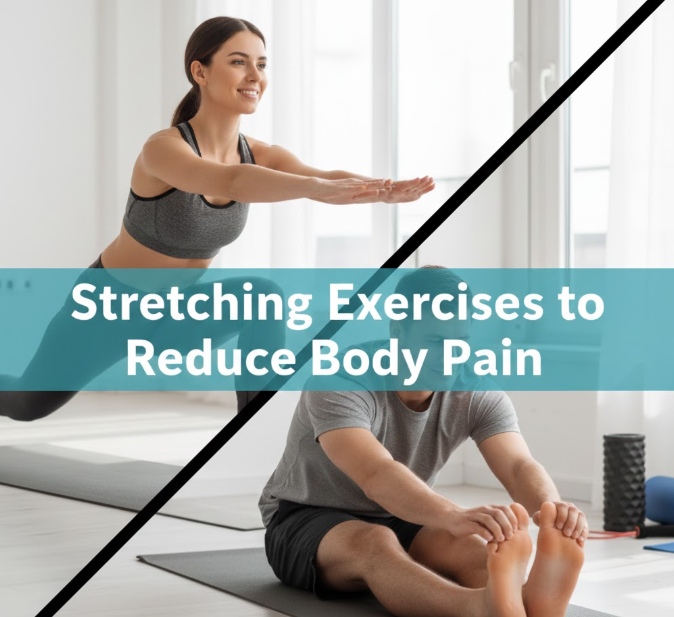
Do you feel sick of getting up stiff-necked? Do you have lower back pain after spending your day at your desk? You’re not alone. Body pain is an issue that is encountered by millions of people on a daily basis, and most of them never know that simple stretching exercises can make a significant difference.
Body pain does not simply occur to the athletes or older adults. It may occur to any person, no matter what age or activity level he/she has. The benefit is that you do not have to spend money to acquire costly equipment or even a gym membership to relieve yourself. Stretching exercises can be used to alleviate pain, enhance flexibility and ease routine tasks.
In this extensive guide, we will discuss the stretching exercise which is practical and will involve various parts of your body. You can find the helpful techniques, regardless of the part of your body that you feel has some tension: neck, shoulders, back, legs and so on.
Why Body Hurts and Why Stretching Works
We will not get into the specifics of exercises before we discuss the reasons why your body is hurting in the first place. The majority of the pains that we experience in everyday life are the cases of muscle tension and stiffness. Long sitting, sleeping in uncomfortable postures or an identical series of movements will make your muscles tight and contracted.
Imagine that your muscles are rubber bands. When a rubber band is stretched or extended or compressed too long it becomes less elastic. This is what also happens to your muscles. They must exercise frequently and stretch in order to be healthy and pliable.
Stretching exercises are effective since they help to loosen up your muscles and get more blood to the part. This helps in several ways:
- Loosens muscle tension and tightness
- Enhances the motion of your joints
- Improves circulation in painful parts of the body
- Relieves your body of the daily stress
- Prevention of future injuries and pain
When you stretch you are giving your muscles an opportunity to rest and re-tune. This is particularly relevant when you are sitting in the same position most of the time.
Most Appropriate Timetables to Engage in Stretching
The issue of time is important in stretching. Although any stretching is a good idea as compared to no stretching at all, it can be best done at the appropriate time so as to maximize the benefits of the process in terms of reducing pain.
Morning Stretching
Waking up your muscles in the morning by engaging in small stretches is a way of waking up. In the mornings often your body is stiff, as you have been lying the same way hours long. Stretching in the mornings can make a great difference in the whole day of your life, and take about 5-10 minutes of your time.
Afternoon Break Time
When you have a desk job or have a repetitive job, it is necessary to take afternoon breaks to stretch. Attempt to stretch after every two to three hours. It is just necessary to be standing and performing a few basic stretches to ensure that pain does not accumulate.
Before Bed
Evening stretches can make your body relax and can enhance the quality of your sleep. Stretching before going to bed relaxes the stress that you have built up all day. This should enable you to sleep more easily and get up feeling less pain.
After Exercise
Stretching after the exercise is very important. Muscles are warm and more relaxed after exercise and this is the ideal time to do the stretching safely.
Slow Motion Upper Body Relief with Neck and Shoulder Stretches
The pain in neck and shoulders is very widespread, and it is common among individuals who spend most of their time using computers or smartphones. These points are very tense and stretching them out on a regular basis can be very relieving.
Simple Neck Tilt Stretch
It is among the simplest and most successful stretching of the neck.
- Sit or stand relaxed in the shoulders
- Tilt your head slowly on your right shoulder
- Hold for 15-20 seconds
- Get your head straight back
- Repeat on the left side
- Repeat three times repetitively on both sides
You will be feeling a slight stretch in the side of your neck. Do not press on your head or pull your head too much by your hand.
Shoulder Roll Exercise
Shoulder rolls assist in relieving the tension in your upper back and shoulders.
- Stand or sit up straight
- Circular rotation of shoulders backward
- Do this slowly 10 times
- Then roll forward 10 times
- Do the whole process two times in a row
This is an easy workout that improves blood circulation and relaxes tight muscles of the shoulders. You can do it anywhere even at your desk.
Cross-Body Shoulder Stretch
This move goes to the posterior part of the shoulder and the upper arm.
- Stand or sit comfortably
- Cross your right arm across your chest
- Your left hand pulls your right arm towards your body
- Hold for 20-30 seconds
- Switch arms and repeat
- Do this twice on each side
You ought to experience the tightness in the shoulder and even on the upper back. Take long breaths when in the position.
Behind-the-Back Clasp
This position opens up your chest and shoulders.
- Keep your feet at a hip distance
- Clasp your hands at the back
- Straighten the arms and lift
- Hold for 15-20 seconds
- Release and repeat 3 times
When you are unable to grip your hands, a towel or strap will fill the gap. With time, you will become more flexible.
Pain Relief Stretches to Soothe the Lower Back
One of the most prevalent complaints in the world is lower back pain. Such stretches may be used to alleviate the pain and avoid the problems in future.
Cat-Cow Stretch
This is an excellent stretch that is yoga-inspired and good for all over your spine.
- Get on your hands and knees
- Bend your back like a cat (round your spine)
- Hold for 5 seconds
- Then put your belly down and raise your head (cow position)
- Hold for 5 seconds
- Repeat 10 times slowly
This exercise lubricates your backbone and exercises your muscles. It is not too intense to be performed daily.
Child’s Pose
This relaxing stretch focuses on your lower back.
- Get on the floor and have your knees at hip level
- Sit back on your heels
- Extend your arms forward and lower your chest toward the ground
- Place the forehead to the floor
- Hold for 30-60 seconds
- Breathe deeply throughout
Child’s pose is also excellent for relaxation and reduction of stress. You are allowed to remain in this posture as long as you feel comfortable.
Knee-to-Chest Stretch
It is a basic stretch that works on both your lower back and hips.
- Lie on your back with bent knees
- Bring one knee up to your chest
- Hold your shin between the hands
- Gently pull your knee closer
- Hold for 20-30 seconds
- Switch legs and repeat
- Do this twice on each side
To go further, one can even bring both knees to the chest. Your lower back is pressing itself on the floor too.
Seated Spinal Twist
This is the stretch that assists in relieving stiffness of the lower back and enhances spinal rotation.
- Sit in a position with legs stretched out straight on the floor
- Bend your right knee, and place the foot of the right leg to the outside of the left thigh
- Place your left arm over your right knee
- Twist your torso to the right
- Hold for 20-30 seconds
- Switch sides and repeat
- Do this twice on each side
Stretching can also be used to relieve tension in the back muscles and this can bring about immediate relief.
Hip and Leg Stretching: Exercises to Enhance Mobility
Tight hips and legs may not only hurt the lower part of your back and knees, but also those formerly tight ones. Frequent stretching of these areas makes them more flexible.
Standing Quad Stretch
This is an area aimed at the front of the thigh.
- Stand near a wall for balance
- Bend the right knee and pull the foot to the buttocks
- Hold your ankle in the right hand
- Keep your knees together
- Hold for 20-30 seconds
- Switch legs and repeat
- Do this twice on each side
Keep your standing leg slightly bent, so as not to lock your knee. Stand straight, keeping yourself erect.
Hamstring Stretch
One of the problems that cause both back and leg pain is tight hamstrings.
- Sit on the floor keeping one of the legs extended
- Bend the other leg to get your foot in contact with the inner thigh
- Reach forward toward your extended foot
- Hold for 20-30 seconds
- Switch legs and repeat
- Do this twice on each side
There is no need to touch your toes. Just go as far as you can and feel the stretch in the back of the thigh.
Hip Flexor Stretch
In contemporary life, our hip flexors are often tight. This stretch serves to loosen them up.
- Kneel on your right knee and have your left foot on the ground
- Push forward your hips
- Keep your back straight
- Hold for 20-30 seconds
- Switch legs and repeat
- Do this twice on each side
You are supposed to feel this pull in front of hip and upper thigh. Put a cushion under your knee where necessary.
Butterfly Stretch
This stretch focuses on inner thighs and hips.
- Sit on the floor, with your feet together
- Hold your feet in your hands
- Press your knees to the floor gently with your elbows
- Hold for 20-30 seconds
- Repeat three times
Stay upright during this stretch. Don’t round your back or bounce your knees.
Full Body Stretches
Certain stretches have the effect of using several groups of muscles simultaneously thus benefiting you more within a short period of time.
Standing Side Stretch
This is the best stretch to work your entire side body between your shoulders and hips.
- Have your feet standing at hip distance
- Lift your right hand straight up
- Lean to your left side
- Hold for 15-20 seconds
- Switch sides and repeat
- Do three times on each side
Do not twist forward, keep them facing forward. You are expected to experience the stretch on your whole side.
Forward Fold
An easy forward bend will stretch your back, hamstrings, and calves.
- Stand with your feet at hip distance
- Fold forward, hinging at the hips
- Let your arms hang down
- Hold for 20-30 seconds
- Bend your knees if needed
- Roll up slowly to standing
In this stretch never push yourself down. Allow the force of gravity to assist and breathe.
Figure Four Stretch
This is a great exercise for your hips and buttocks.
- Lie on your back with both knees bent
- Cross your right ankle over your left knee
- Take your hands and clasp them behind your left thigh
- Draw your left leg towards your chest
- Hold for 20-30 seconds
- Switch sides and repeat
This is the stretch that can be used to relieve sciatic nerve pain and tightness of hips.
Creating Your Everyday Stretching Routine
Since you have learned about different stretching exercises, now you need to develop a routine that fits well. Consistency is greater than perfection.
Beginner Routine (10 minutes)
Begin with these five stretches:
- Neck tilts (2 minutes)
- Shoulder rolls (1 minute)
- Cat-cow stretch (2 minutes)
- Knee-to-chest stretch (3 minutes)
- Standing quad stretch (2 minutes)
Intermediate Routine (20 minutes)
Keep adding more stretches when you create the habit:
- All beginner stretches
- Child’s pose
- Hamstring stretch
- Hip flexor stretch
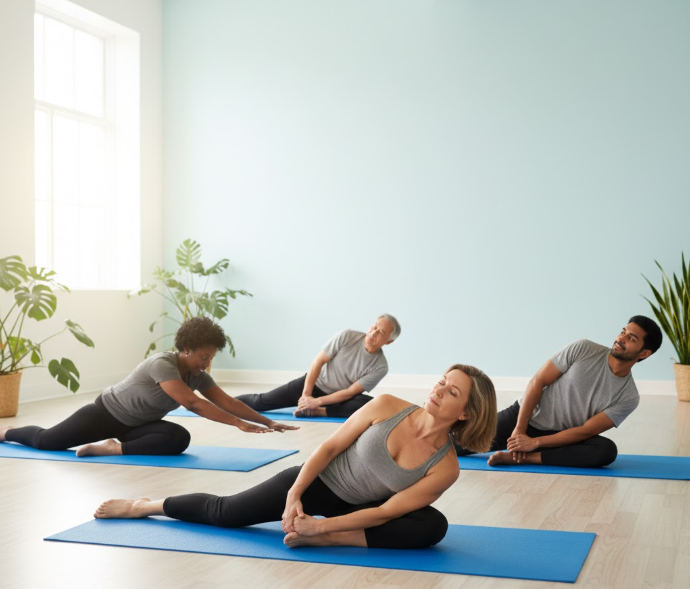
- Seated spinal twist
Advanced Routine (30 minutes)
Include all the stretches mentioned in this article. Take time to work on those areas which seem to be tight or painful.
| Routine Level | Duration | Number of Stretches | Best For |
|---|---|---|---|
| Beginner | 10 minutes | 5 stretches | Building the habit |
| Intermediate | 20 minutes | 8-10 stretches | Regular care |
| Advanced | 30 minutes | 12-15 stretches | Whole body care |
Tips on Stretching That Would Help Keep the Body Safe
Stretching is not dangerous as long as it is performed properly, and there are several crucial points to be taken into account.
Never Bounce
Bouncing while stretching may result in tears to the muscles. Always stretch slowly and maintain the position.
Breathe Normally
Do not hold your breath while stretching. Breathe in and out slowly in a deeper manner to get your muscles to relax.
Listen to Your Body
The stretching process must not be painful but rather a pulling sensation. When it hurts one should stop at once.
Warm Up First
Never stretch cold muscles. Do light exercises such as walking or arm circles prior to stretching.
Stay Hydrated
Drink water before and after stretching. Hydrated muscles are more flexible and have reduced chances of injury.
Be Patient
Flexibility improves over time. Never compare yourself to anyone and do not work too hard too fast.
Check With Your Doctor
If you have chronic pain, injury, or health conditions, it is a good idea to discuss your new stretching routine with your doctor before starting it. For more health and wellness tips, visit Cakvia.
Common Mistakes to Avoid
With the best of intentions, however, there is frequent probability that one will do things wrong, thereby diminishing the efficacy of stretching or even causing harm.
Rushing Through Stretches
Taking time is essential. Holding a position which does not last more than 15 seconds is not enough to lengthen your muscles. Stretch a minimum of 20-30 seconds.
Stretching Only When in Pain
Use your time when you are not in pain to stretch. Stretching helps in avoiding the pain before it occurs.
Ignoring Tight Areas
None of us is flexible all around. Give special attention to your problem areas instead of avoiding them.
Comparing Yourself to Others
The flexibility of everyone varies. Pay attention to your own progress and avoid the attempt to be similar to another person.
Skipping Days
Consistency is preferred to intensity. Rather than stretching 60 minutes once per week, it would be better to stretch 10 minutes daily.
The Role of Stretching in Overall Health
Stretching exercises are not the only aspect of minimizing body pain. They are best used in conjunction with other healthy practices.
Regular Movement
Attempt to move during the day. Get on your feet regularly and do not spend more than one hour on your seat.
Good Posture
Be aware of your sitting, standing and sleeping positions. Bad posture places additional pressure on muscles and joints.
Adequate Sleep
It is during sleep that your body heals itself. Strive to have 7-9 hours of good sleep per night.
Stress Management
Stress leads to tension of muscles. Discover healthy means of managing stress such as deep breathing, meditating, or doing something you love.
Proper Nutrition
Healthy eating helps in keeping the muscles healthy. Eat plenty of water, fruits, vegetables and protein.
When to Seek Professional Help
Although most forms of body pains can be alleviated by the use of stretching exercises, there are times when you require extra help.
Visit a doctor or physical therapist in case of:
- You are in severe pain or pain is becoming worse
- More than a few weeks of stretching does not eliminate pain
- You experience numbness or tingling
- Pain was as a consequence of an injury or accident
- You can hardly do daily activities
- Pain causes sleeplessness
A medical professional is able to diagnose some underlying problems and develop an individualized course of treatment for you. According to the American Physical Therapy Association, physical therapists can provide personalized stretching programs for chronic pain management.
Taking the First Step Today
To begin with a stretching routine does not necessarily need to be complicated and time-consuming. What matters most is to start even though you may have only five minutes to spare.
Select one or two stretches from this article that work on your most painful areas. Do them once today. Then do them again tomorrow. You will develop a habit that will greatly decrease the pain in your body within no time.
It is important to remember that change is a gradual process. One stretching session may not change you dramatically but just continue doing it. Majority of individuals will observe an improvement in two to three weeks of consistent stretching.
Your body is meant to move and stretch. By making stretching exercises a daily routine, you are providing your muscles with the requirements to keep them healthy, flexible and pain-free. You deserve to feel good in your own skin, and these easy poses can enable you to achieve this.
Frequently Asked Questions
How long should I hold a stretch?
Hold stretches for 20-30 seconds. This allows your muscles sufficient time to relax and lengthen. You can even hold for up to 60 seconds on very tight areas. Do not bounce or force a stretch.
Can I stretch every day?
Yes, gentle stretching daily is safe and healthy for the majority. Actually, stretching every day is better than strenuous stretching several times per week. Listen to your body and take a day off if needed.
Should stretching hurt?
No, stretching should never feel painful. It should be a sense of tension or a pull, but not pain. You should stop at once should you feel sharp or intense pain. Pain is the way your body communicates to you that something is wrong.
Should one stretch before or after exercise?
The best pre-exercise stretching is dynamic (moving) stretching to warm up. You should perform static stretches (holding positions) after exercise when the muscles have been warmed. To relieve pain, you can engage in static stretches at any time.
How soon will I get results from stretching?
Within 2-3 weeks of daily stretching, most individuals will experience some improvement in flexibility and reduction of pain. After 4-6 weeks, major changes are observed. The outcomes are determined by consistency and the level of starting flexibility.
Can stretching make my pain worse?
Stretching may aggravate pain in case it is performed improperly. Never force a position, always stretch gently, and discontinue if there is pain. Stretching should improve pain; if it worsens it, seek the help of a healthcare professional.
What should I do if I am not flexible at all?
Everyone starts somewhere. Props can assist you: towels, straps or yoga blocks. Pay attention to minor improvements. You will gain flexibility through constant practice. Do not compare yourself to other people.
Is equipment required to do stretching exercises?
Basic stretching does not demand any special equipment. A carpet or yoga mat is used for cushioning, but you can stretch on any surface that is comfortable. Some stretches might require the use of a towel or strap if you lack flexibility.
Are stretches beneficial in relieving arthritis?
Light stretching will help keep the joints in motion and minimize the stiffness of arthritis. Nevertheless, you should discuss which stretches are safe for your case with your doctor or physical therapist.
Is it normal to feel sore after stretching?
Mild soreness the following day may be normal if you are new to stretching or you have attempted new stretches. This should be light muscle soreness and not pain. When soreness persists and does not subside in a day or two, you may have overstretched.