
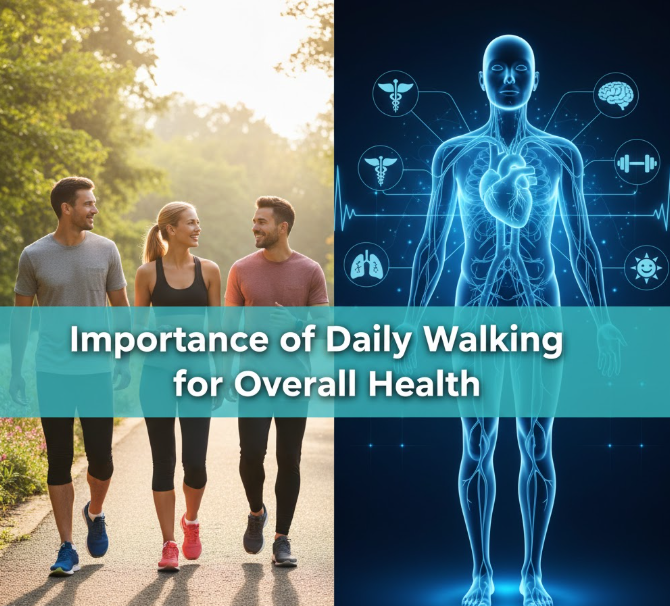
One of the easiest activities that you can do for your body is walking. You do not have to have any fancy equipment or gym membership, or even special skills. All you need to do is to put on comfy shoes and go outside. Nevertheless, this simple exercise provides strong health outcomes that can change your life.
Millions of people are finding out every day that exercise makes them feel better, makes them look better, and live longer. It doesn’t matter whether you are young or old, fit or still on your way to health, walking suits everyone. This guide offers an insight into the importance of walking as a habit that may prove to be the most significant decision you will ever make in relation to health.
Why Your Body Loves Walking
It is a natural way of using your body. When walking, your heart beats quicker, your lungs work harder, your muscles are active—everything is engaged from your feet to your very heart. This simple motion produces a ripple effect of positive changes in all the systems that you have.
A walk is not overwhelming as compared to high-intensity workouts that may be exhausting. It is not stressful exercise but natural movement for your body. This is the reason why you are able to do it daily without getting exhausted or endangering yourself.
The beauty of walking is in the fact that it is accessible. You can walk where you wish, when you wish, and how quickly you wish. Begin slowly and increase gradually. Your body will appreciate the consistency.
A Healthy Heart is a Huge Positive
Your heart is a muscle that requires constant exercise to be a strong one. There is nothing like walking to get your heart racing, but it does not strain it.
By walking frequently you will make your heart work more efficiently at pumping blood. This implies that it is not forced to exert itself so much to provide oxygen and nutrients to your body. In the long run, this efficiency will prevent a load on your cardiovascular system.
Studies indicate that individuals who take at least 30 minutes to walk each day possess very low rates of heart disease. Walking is useful in reducing bad cholesterol and increasing the good cholesterol. It is also very much helpful in containing blood pressure within healthy levels.
Better still, you do not have to walk fast to get benefits. An ideal moderate pace is one with which you can still converse. It is consistency and not intensity that is the key.
Management of Weight is Made Easier
Maintaining proper weight is a challenge to most individuals. A walk is a solution that is sustainable, and does not entail excessive weight loss diets or grueling exercises.
Any movement you make burns calories. Although walking may not have as many calories burnt in one minute as running, it is something that can be sustained over a longer time frame. On top of that, you will probably continue walking in the long term since it does not seem punishing.
Depending on your weight and the speed, one can burn between 100-200 calories during a 30-minute walk daily. In a year, that would equate to great calorie loss. Walking in combination with mindful eating is a potent tool for weight management.
The walking also maintains muscle mass and sheds off fat. Whenever you are on a diet and not exercising, it is very common to lose fat and muscle. The process of walking tells your body not to lose the muscle as it uses the fat stored in your body as energy.
Improvements to Mental Health that You Will Observe
Walking is a good thing for your mind, as well as for your body. Mental health benefits are the ones that tend to be a surprise to individuals who begin to walk routinely.
Exercise releases endorphins, or natural mood elevators in your body when you walk. These are chemicals that make one feel happy and minimize stress. A good number of individuals believe that a morning walk will help them to start their day on a positive note.
When you feel anxious or depressed, a walk will help you. Walking has a meditative quality that soothes racing thoughts due to the rhythmic nature of walking. All these advantages are enhanced when one is in the natural environment.
Daily walking also enhances the quality of sleep. Exercising on a regular basis can help regulate your sleep-wake cycle. Individuals who walk on a regular basis report having better sleep in terms of falling asleep quicker and having deeper sleep.
Walking as Stress Relief
All people are different at dealing with stress, yet walking is a universally applicable solution. Stress hormones are released in your system and by walking you burn them naturally.
A walk also gives you room in your mind to think issues over or just empty your mind. A change of scenery and fresh air give a perspective that is difficult to get when one sits at the desk or is in bed.
A lot of successful people swear by walking meetings or walks in order to have complex problems solved. The mixture of movement and fresh air appears to open creative thought.
Stronger Bones and Joints
Bones require stress in order to remain healthy. This may seem backwards, yet it is a fact. Exercises involving weight such as walking send a signal to your bones to remain strong and dense.
The loss in the bones is a real issue as you grow old, especially in women after menopause. Exercise in the form of daily walking retards this process. Each movement generates minor stress that evokes bone-forming cells to greater efforts.
Regular walking is also good for your joints. Exercise keeps the joints lubricated and the cartilage in good health. Arthritic patients usually experience that consistent exercise decreases the pain and stiffness as compared to inactivity.
The thing is consistency and right form. Exercising on varied surfaces exercises your bones and joints in a healthy manner, and develops resilience over time.
Prevention of Disease That Works
Exercise is preventive of many severe diseases. The protective effects extend well beyond the heart.
The prevalence of type 2 diabetes is on the rise across the world but walking provides some formidable defense. Regular walking keeps blood sugar levels normal by allowing your body to use insulin better. For individuals already diagnosed with diabetes, walking is used to control the condition, as well as to minimize complications.
Regular walks also help in reducing the risk of cancer. Research associates regular exercise with reduced incidences of colon, breast, and lung cancer. Although walking is not a guarantee of immunity against cancer, it greatly provides an advantage.
The risk of stroke is reduced significantly when regular walking is involved. Exercise is beneficial as it keeps the blood vessels healthy and prevents the development of harmful blood clots. The same cardiovascular benefits that prevent heart disease protect the brain.
What Is the Real Amount of Walking You Need?
The magic number that health experts recommend for moderate activity is 150 minutes per week. This translates to only an amount of 30 minutes per day for 5 days a week. Most people can do that.
In case the 30 minutes seems excessive at the beginning, begin with 10 minutes. Three ten-minute walks in a day are equal to one 30-minute walk. The accumulated time is important and not doing it all at once.
To lose weight or gain other health benefits, 45 to 60 minutes a day is the goal. But keep in mind, some walking is better than no walking. Do not allow perfect to be the enemy of good.
Building Your Walking Habit
Developing a new habit takes planning. Choose a particular time every day and walk. Morning is beneficial to most individuals since it is completed before life becomes hectic. Others feel like taking lunchtime walks or evening walks.
Associate walking with what you have already done. Walk in the morning after you eat breakfast, or during your lunch break, or while listening to your favorite podcast. New routines linked to old routines become permanent more easily.
Monitor your progress by a simple journal or a smartphone app. The feeling of a streak of consecutive walking days will be motivating. Celebrate milestones such as your first full week or month of daily walking.
For additional wellness insights and health tips, visit Cakvia.
Taking Walking to the Next Level
As much as any walking is good, there are strategies that will maximize your efforts. Increasing the speed of your walk enhances cardiovascular benefits and caloric burning. The goal is to have breathing be a bit more difficult while at the same time being able to speak.
Inclines or additions of hills make your walk supercharged. Uphill walking involves a greater number of muscles and more calories are burned. In the event that you reside in flat locations, then use stairs or a treadmill with an incline setting.
Change your paths, so that you make things different and work out other muscles. It is tedious to take the same route daily and allow your body to get used to it. New ways keep your brain active, your body on its toes.
When normal walking is no longer a challenge, you can consider adding weight by walking with hand weights or wearing a weighted vest. This gives resistance training advantages to your cardio workout. Begin with a light load and add weight gradually.
Social and Lifestyle Advantages
There are physical benefits to walking. New walkers are usually taken aback by the social and lifestyle changes.
Exercise becomes fun time spent with friends or family. It is easy to chat during a walk and one can easily relate more than when sitting at a table. Walking clubs or groups offer inherent accountability and companionship.
You will explore your neighborhood differently. By simply strolling by houses and businesses, you are able to see things that you would not see in a car. This sense of belonging comes out of this connection with your community.
By walking to local places, one is able to save on fuel budget and parking costs. It is healthier for the environment as well. These are practical advantages in the long-term.
Walking Safety Tips
When creating a walking habit, safety is important. Always walk in well-lit streets, particularly during the early mornings or evenings. Wear bright or reflective clothing to ensure that you are easily visible to drivers.
Be mindful at all times and ensure that music or podcasts are not too loud that you cannot hear traffic and other sounds. Save the noise-cancelling headphones for the gym.
Walk against traffic on roads without sidewalks. This allows you to view cars coming your way and take action in case of necessity. Observe street rules and road signs in cities.
Share the route and expected time to be back on long walks in remote areas. Keep your cell phone in case of emergency. Most issues are prevented through basic preparation.
Breaking Down Common Obstacles
Every person has barriers to exercising. The most popular excuse is weather. Too hot, too cold, too rainy—there are excuses all the time.
Fight this with proper equipment. Buy a quality rain jacket, cold weather layers, and heat moisture-wicking clothes. There is no bad weather, only bad dressing.
The other typical obstacle is time constraints. Note that three 10-minute walks are the same as one 30-minute walk. Wake up 15 minutes earlier. Use half your lunch break. Exercise while your children play at the park.
Many walking routines are killed by boredom. Fight it by switching paths on a regular basis, walking with other people, listening to interesting audio materials, or visiting new areas.
Pain or discomfort implies that something should be corrected. Get good supportive walking shoes. Begin slowly and progress gradually. Consult a physician in case the pain continues after these interventions.
Walking in the Various Stages of Life
Anyone can walk regardless of age and fitness level, although the approaches differ.
Among young adults, walking is popular as a stress reliever and socializing activity. Morning walks with friends or walking with colleagues during breaks are ideal as they can be accommodated even in tight schedules.
Young kids can be taken in strollers by their parents or even walk alongside while the children ride bikes. Teaching children to walk regularly is a lesson that fosters healthy lives. Play games like counting cars of various colors or “I spy.”
The advantages of daily walking to middle-aged adults cannot be underestimated because metabolism is slowing down as health concerns increase. Exercise helps one stay slim, prevent diseases, and maintain a clear mind during stressful years.
Older people consider walking as the way to remain independent and stay active. Balance is enhanced and falls are prevented. Loneliness is fought by social walking groups. Move at speed and distance according to present capabilities while also challenging oneself.
According to the Centers for Disease Control and Prevention, these findings show that walking benefits increase with duration, particularly among individuals over 40 years old.
Comparison of Walking Benefits by Duration
| Daily Walking Time | Calories Burned | Key Health Benefits | Best For |
|---|---|---|---|
| 10-15 minutes | 50-75 | Simple circulation, stress relief | Beginners, very busy schedules |
| 20-30 minutes | 100-150 | Heart health, mood boost, weight maintenance | Most adults, general fitness |
| 45-60 minutes | 200-300 | Weight loss, disease prevention, endurance | Active people, weight control objectives |
| 60+ minutes | 300+ or higher | Maximum health benefits, training | Athletes, serious fitness enthusiasts |
Estimated calories for a 150-pound individual at moderate speed.
Tracking Your Progress
Measuring the distance that you walk helps to remain motivated. Most people prefer simple techniques.
Smartphone apps or step counters give immediate feedback. Knowing how many steps you took every day is a motivator. The total number of steps per day should be 7,000-10,000, and this should be the goal.
Monitor your mood, not just figures. Notice increased energy, improved sleep, looser pants, or reduced stress. Real-world changes are more important than any statistic.
Record monthly photos/measurements in case of weight loss. Visual progress inspires even when the scale does not change much. It is important to keep in mind that gaining muscle and losing fat may lead to slower scale changes.
Establish short and long-term objectives. This week, walk five days. This month, complete 20 sessions of walking. This year, walk 1,000 miles. Layered goals keep the momentum.
Frequently Asked Questions
Is walking the proper kind of exercise?
Yes, walking offers adequate exercise to maintain general health as long as one practices it on a regular basis. A brisk walk on the majority of days satisfies the minimum exercise needs of health organizations. To reach certain fitness objectives such as developing considerable muscle or preparing to engage in sports activities, you will require supplemental exercises.
Which is the most appropriate time of day to walk?
The most appropriate time will be when you are going to do it regularly. Waking up in the morning makes your day active and provides exercise before other chores can come in between. Evening walks can be utilized to relieve stress of the day and may promote sleep. Select what suits your schedule and pleasure.
Should I walk before eating or after eating?
Both work well for various reasons. Post-meal walks help regulate blood sugar spikes and aid in digestion. Exercising in the morning before having breakfast burns a little more fat. The variation is minimal, so choose what is comfortable for your body.
What is the required speed of walking to achieve health benefits?
The moderate level where it is a little harder to breathe, yet you can still make a conversation is ideal. This is normally 3-4 miles per hour. Nonetheless, even slower-paced walking does have its advantages, particularly among beginners or those with mobility issues.
Will walking reduce belly fat?
Walking burns calories and assists in building the calorie deficit required to lose weight, including belly fat. But spot-reducing fat in any particular area is impossible. Regular physical exercise such as walking combined with proper diet results in fat loss generally, including at the belly.
What should I do when walking is painful to the knees or feet?
First, check your shoes. Several problems are brought about by worn-out or inappropriate footwear. Use softer surfaces such as grass or tracks rather than concrete. Begin small and work up. In the event of persistent pain, see a healthcare professional to eliminate underlying problems.
The Simple Truth of Walking
Walking is a health wonder, and it does not take any extreme effort and sacrifice. It is a simple activity that makes your heart better, manages your weight, keeps your bones stronger, improves mood, and prevents diseases.
The best part? You can begin today, at this moment, anywhere. No preparation needed. All you have to do is to stand up and make that first step.
It is not about perfection but more about consistency. Walk on the majority of your days, even when you are not motivated to do it. The gains accumulate over weeks, months, and years. Your future self will be glad that you invested this time.
Don’t overthink it. Find some comfortable shoes, go out the door, and walk. Your body already knows what to do. Let it prove to you that life is even better when you are used to walking.
The value of walking every day to remain healthy is much more than physical fitness. It reaches all the areas of your wellbeing, including mental clarity, social connectivity, and disease prevention. This free and available activity may be as close to a miracle drug as we can get.
Begin walking today. The best, happiest you is right outside your front door.