
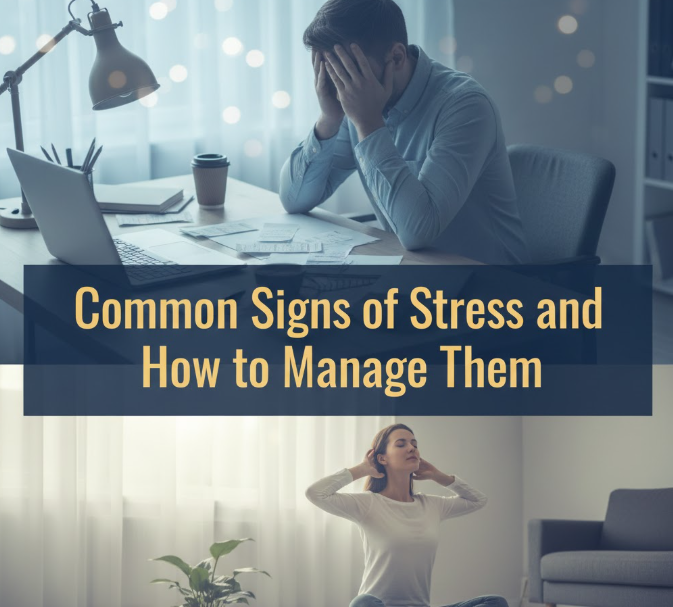
Stress is a thing that any individual can relate to in his or her lifetime. Stress manifests itself in various ways, whether you are about to take a major test, fight with your friend, or you are so overwhelmed at home. However, what do you do to know when the stress is too much? And what more is to do, more to the point?
This guide will take you through the typical symptoms of stress and provide you with the practical methods of coping with it. You can save your mental and physical well-being by learning to recognize stress early and take action.
What Exactly Is Stress?
Stress refers to the response of your body to certain difficulties or demands. Your brain also reacts to a difficult or threatening situation by preparing you to handle the situation. This has been referred to as the fight or flight response.
Stress is beneficial in low doses. It may encourage you to work harder, play better or beat time limits. However when stress lingers too long or is too intense, it may damage your health and even your happiness.
Stress is of various kinds:
- Acute stress: This is momentary stress that ends easily, such as being nervous prior to an interview.
- Chronic stress: Weeks or months of continued stress, e.g. persistent problems with the family, or continuous school pressure.
- Episodic acute stress: When you have acute stress in the form of a pattern of feeling overwhelmed.
Physical Clues Your Body Is Stressed
When stress level increases, your body usually gives out signals. These physical symptoms are the way your body is seeking your assistance, listen to them.
Common Body Signals
One of the initial symptoms that many individuals pick up is the presence of headaches and tension in the body muscles. With stress, your muscles tighten up and particularly the neck, shoulders and back. Such a strain may result in severe headaches that will not be relieved with simple painkillers.
Another significant pointer is sleep problems. You may have the evening lying awake at night to keep your thoughts off. Or you also may sleep excessively, and use it as a way of avoiding stressful situations. Anyhow, bad sleep exacerbates stress, and it becomes a challenging process.
The problems with the stomach are common with stress. You may feel nauseated, have diarrhea, constipation or generally feel uneasy in the stomach. Others lose their appetite altogether and others consume excessive food than usual.
There are other physical warning signs as well:
- Fast heart rate or chest pains
- Sweating more than normal
- Becoming ill more frequently (poor immune system)
- Becoming exhausted even after having had a rest
- Dizziness or shaking
- Clenching or grinding of the teeth
Cognitive and Affective Red Flags
Stress does not only impact on the body. It is very influential on your feelings and the manner of thinking.
Mood Changes
When pressure mounts you may find yourself becoming irritable or an angry person about minor issues. Things that would have otherwise not bothered you before, become intolerable. You may yell at your friends or relatives without attempting to.
Concerns and worry are made into regulars. Your thoughts are brimming with the scenarios of what-ifs and you cannot appear to relax. When no threat is imminent, you are on the alert.
And what a wonderful feeling of being overwhelmed. All this seems excessive and you do not know where to begin. Simple chores do not appear to be possible.
Stress is Indicated by the Following Patterns of Thought
Stress alters brain functioning. You might experience:
- Poor concentration: You have read a sentence 5 times and you do not recall what it was.
- Memorization issues: You lose things like appointments, assignments or what someone has just said to you.
- Constant negative thoughts: Your inner voice is too negative and critical.
- Racing thoughts: You are thinking about something one worry at a time.
- Weak decision-making processes: You are weak in making decisions even simple ones.
It Manifests Itself Through Behavioral Changes That Indicate Stress
Stress tends to take control of your life and your behavior usually varies.
Social Withdrawal
Numerous individuals struggling with stress drive away their friends and relatives. You can cancel plans, miss social events, or shelve time alone. Although spending time alone is not unhealthy, when you are totally isolated, it intensifies stress.
Changes in Daily Habits
Monitor the following changes in behavior:
- Procrastination: Deferring those things to which you are not particularly having issues.
- Nervous habits: Biting nails, pacing, fidgeting or scratching your skin.
- Drug and alcohol use: Resorting to alcohol, drugs or caffeine overload.
- Failure to execute duties: Skipping classes, not meeting deadlines, or not taking significant tasks.
- Eating in a different way: Overeating or barely eating.
Effects of Stress on Various Spheres of Life
| Life Areas | How Stress Affects Life Areas |
|---|---|
| School/Work | Bad grades, lack of time, decreased output, loss of concentration at school/work place |
| Relationships | More fights, withdrawing, not communicating |
| Physical Health | Weakened immunity, changes in weight, persistent pain, heightened illness |
| Mental Health | Increasing vulnerability to depression and anxiety disorders, negative self-talk |
| Daily Activities | Loss of interest in hobbies, exercise, poor self-care |
The Following Are the Techniques of Quick Relief to Immediate Stress
These methods will enable you to stop panicking when you are in the dire need of doing so.
The Power of Breathing
One of the quickest methods of reducing stress is deep breathing. Here’s a simple method:
- Sit or stand in a comfortable position.
- Inhale slowly with 4 counts in the nose.
- Hold your breath for 4 counts.
- Exhale slowly out of the mouth in 6 counts.
- Repeat 5-10 times.
This method will inform your nervous system to relax and overcome stress reaction.
Physical Movement
The stress energy must be expended in your body. Try these quick options:
- Take a 10-minute walk outside
- Do 20 jumping jacks
- Stretch arms, neck and shoulders
- Dance to your favorite song
- Shake out your arms and legs
Exercising would burn the stress hormones and enhance mood boosting chemicals in your brain.
Sensory Grounding
In cases when you feel disconnected due to stress, grounding strategies help you get back to the present:
- Hold an ice cube in your hand
- Smell something nice such as peppermint or lavender
- Play some soothing music or nature sounds
- Find 5 items and name them as to what you see
- Pet an animal if there is one
Stress Management Strategy: Long Term Strategies
Quick fixes are beneficial in the short-term but long term habits make us resilient to stress.
Establish a Regular Sleep Pattern
The reset button of your body is sleep. Aim for 8-10 hours each night by:
- Going to bed at the same time each night
- Having a cool dark bedroom
- Switching off the screens 1 hour before sleep
- Avoiding caffeine after 2 PM
- Establishing a calming sleep habit
Build a Support Network
Don’t face stress alone. Good relationships give emotional and practical assistance:
- Share your experience with trusted friends or family members
- Join clubs or groups in which you can associate with others
- Take into account visiting a counselor or a therapist
- Search internet sites of individuals with similar problems
- Ask for help when you need it
Practice Time Management
The sensation of being overwhelmed is usually as a result of poor planning. Take control by:
- Applying a planner or calendar application
- Subdividing big tasks into small manageable steps
- Establishing realistic deadlines that have buffer time
- Learn to say no to things that you cannot cope with
- Maximizing on what matters most
Stress Reduction Lifestyle Changes
Eat for Mental Health
What you eat has a direct influence on the level of stress. Examples of food that can assist in stress management include:
- Complex carbohydrates: Whole grains, oatmeal, brown rice
- Lean proteins: Chicken, fish, beans, nuts
- Omega-3 fatty acids: Salmon, walnuts, flaxseeds
- Fruits and vegetables: Berries, leafy greens and oranges in particular
- Herbal teas: Chamomile, green tea, peppermint
Avoid or limit:
- Excessive caffeine
- Sugary snacks and drinks
- Processed foods
- Alcohol
Regular Exercise Routine
One of the most stress-reducing things is physical activity. You do not even have to be a sports star—exercising is just the way:
- 30 minutes exercise most days is best
- Select the activities that you like: walking, dancing, swimming, biking, yoga
- Workout together with friends to mix social support and physical exercises
- Make movement breaks hourly when you spend much time sitting
- Do not get bored with the same activities
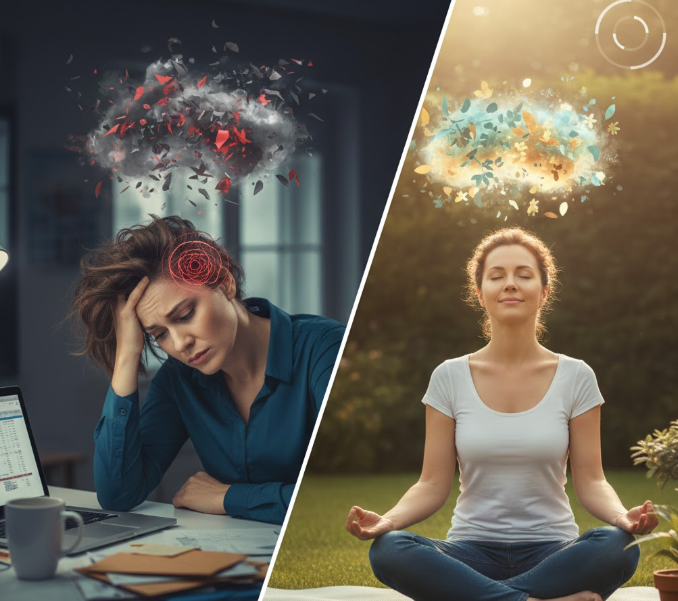
Mindfulness and Meditation
These activities help your brain to remain cool when you are under pressure:
Simple meditation practice:
- Sit quietly for 5-10 minutes
- Focus on your breathing
- When the mind is not concentrated, you can bring your mind back to your breath
- Don’t judge yourself—wandering minds are normal
Mindfulness in daily life:
- Eat mindfully, tasting and touching
- Go on conscious walks, looking about
- Find three good things to be thankful for each day
- Do not multitask, then do single task
Creative Stress Solutions
Being creative in the expression of stress provides it with an outlet.
Journaling
Identifying your thoughts and feelings by writing about them is a way of processing them. Try:
- Free writing: Turn on a timer and write about anything that appears in your mind within 10 minutes
- Gratitude journals: Each day write down what you are thankful that you have
- Problem-solving entries: Write about a problem, and brainstorm ideas to solve it
- Emotion monitoring: Keep a record of your moods and the factors that instigated them
Artistic Expression
You do not have to be gifted in order to be creative:
- Draw, paint, or color
- Play music or sing
- Write poetry or stories
- Build or craft something
- Take photographs
The action is more important than the outcome. Doing something will assist your brain to move over stress.
Indications of When to Seek Professional Help
There are times when the stress is beyond the individual. Look to contact a professional when:
- Stress has over two weeks of interference in everyday activities
- You think about harming yourself or others
- You are taking drugs to deal with stress
- Physical symptoms do not respond to self-care
- You feel hopeless or depressed
- Panic attacks are frequent
- Relationships are being seriously impacted
Mental health experts are able to offer:
- Counseling with improved coping strategies
- Medication if needed
- Individualized stress management interventions
- Helping in tough situations
Keep in mind: When you need some help, it means that you are strong, not weak. For more resources on mental health and wellness, visit cakvia.com.
The Ability to Become More Resilient to Stress in the Long Run
Resilience can be described as your capacity to recover when faced with a problem. You may reinforce it by:
Developing a Growth Mindset
See the obstacles as learning opportunities not threats. Whenever you make mistakes, you should ask yourself, “What can I learn out of this?” rather than “Why is it I am so bad at this?”
Setting Healthy Boundaries
Figure out how to conserve your time and energy:
- Say no to demands which overpower you
- Set stress minimization goals on time spent with individuals that cause stress
- Find areas, which you are able to stay without interruption
- Be clear in communication of your needs
Maintaining Perspective
When you are stressed, remember:
- This situation is temporary
- You have dealt with complicated things before
- Not all things have to be responded to at all
- It’s okay to not be perfect
Developing Your Own Stress Management Plan
The causes of stress and coping strategies of everyone differ. Create a customized plan:
- Trace where you stress out: Make a list of stress causing situations, people or thoughts
- Be aware of your danger signs: What are your first physical, emotional, or behavioral signs?
- Select your favorite stress management strategies: Select three to five stress management strategies that have been the most effective
- Preventive activities involving schedule: Exercise, sleep and rest periods
- Prepare ahead of time: Plan for high-stress situations: Have additional support when you are taking exams, during busy times, or during difficult events
- Review and make changes: Take a monthly check-in to review what is working and what needs to change
One Must Step Forward with the Confidence of the Future as a Part of the Present
Stress is a natural process in life, and it does not have to dominate over you. With the early identification of the signs and early intervention, you will be able to deal with stress before it gets out of hand.
Start small. Select one or two of the techniques on this guide and test them this week. Add more strategies as they turn into habits. Be patient with yourself—it is a skill that is perfected over time.
It is important to remember that stress manifests itself in different ways in all people. What works with your friend may not work with you and that is all right. Experiment and eventually find your own formula of living in balance.
Stress is not as powerful as you may believe. With the proper tools and resources, you will be able to take on challenges with confidence and fight to uphold your health. For additional evidence-based information on stress management, you can visit the American Psychological Association.
Frequently Asked Questions
What is the duration of action of stress management methods?
Certain methods such as deep breathing act instantly and provide you with relief in a few minutes. Some such as routine exercise or meditation accumulate advantages over weeks. Majority of people observe great improvements in 2-4 weeks of routine practice. It will be the ability to stick with it even without seeing immediate results.
Would stress ever do you good?
Yes! Acute stress, or eustress, can help to perform better and stimulate you. It is what makes you concentrate in exams or excel in the contest. The issue arises when the stress is too much or even too long before relief.
What is the distinction between stress and anxiety?
Stress is a reaction to a certain outside stimulus such as an impending deadline. Anxiety is a more broad concept of worry or concern that may persist even when the stressor has been eliminated. Anxiety has no visible cause whereas stress does.
Is stress a daily state of the matter?
Although small-scale stresses are the order of the day, it is not normal or healthy to experience a lot of stress on a daily basis. When you find yourself under continuous high stress levels, it is necessary to investigate the cause of the stress and do something about it. Think about having a counselor or adult that one can trust.
Can you get physically sick by stress?
Absolutely. Stress over a long period of time impairs your immune system leaving you susceptible to colds, flu, and other diseases. It may also cause severe health conditions such as high blood pressure, cardiovascular diseases, and digestive disorders in the long term.
What can be done with the things that are stressing me out that I cannot change?
You are not able to change something in a situation but you are able to change your reaction to it. Concentrate on what you can manage: your responses, your self-care, your support group and your coping mechanisms. Accepting things that we cannot do is in itself a stress reliever at times.
How do I know that I need stress therapy?
When stress is affecting your everyday life, relationships or health and it is taking longer than two weeks, therapy can assist. Some others can be feeling that you cannot cope, having panic attacks, finding unhealthy ways to cope with stress. A therapist is able to instruct you on customized methods and support you.