
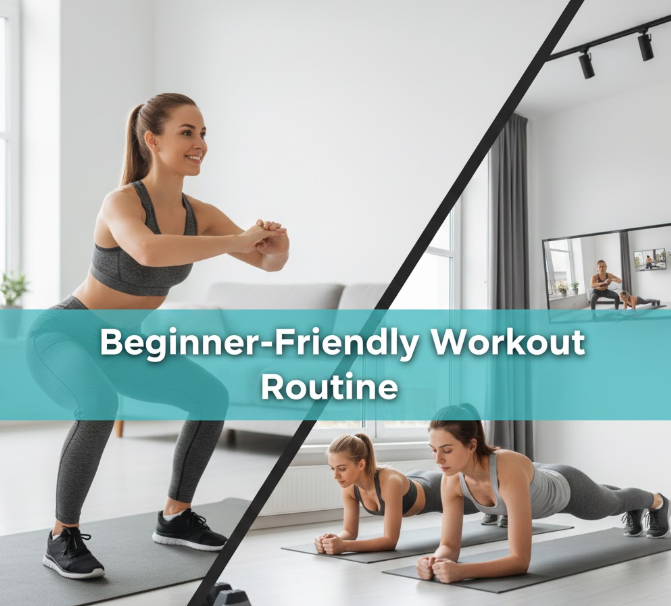
It is frightening to go on a fitness journey. You may come to the gym and be confused with what to start with. Perhaps you have watched fitness influencers perform complicated exercises and believed that you are not like them.
The fact is that here everyone has a beginning. All sportsmen, muscle builders, and fitness lovers started as absolute beginners. It is all about locating a beginner-friendly exercise program that fits your schedule and can make you gain confidence.
This tutorial shall take you through all you should know. You will also get to know the easy exercises, the making of a schedule, and how to motivate yourself. At the end, you will have a good plan of how to begin your fitness journey today.
Simple Starting: This is the Reason Why It is a Good Idea to Start with Something Simple
The same mistake is made by many people when they start working out. They attempt to have too much too soon. This will result in burnout, injury or giving up altogether.
An exercise program with a low barrier is effective in establishing a solid background. Imagine it is just like learning to read. Before getting into novels you begin with the alphabet. Exercise works the same way.
You should begin at a simple level so that your body can get used to it. Little by little your muscles become stronger. Your joints get to know how to move correctly. Above all, you develop a lasting habit.
What is It Like in a Workout as a Beginner
There are no activities that are designed equally well to begin with. An exercise program that is easy to follow has a couple of characteristics that precondition its success.
Easy to Learn Movements
The workouts must be easy to follow and do. They should not take a PhD in anatomy to figure them out. Simple exercises such as squats, push-ups, and planks are the most suitable.
Low Risk of Injury
Novices require safe exercises when properly performed. Complex actions involving heavy weights expose one to more risk of injury. A safer starting point is with bodyweight exercises and light resistance.
Flexible Time Commitment
Life gets busy. The optimal routine is one that fits into your schedule and does not occupy your life. Three times per week, starting with 20-30 minutes is ideal.
Room to Grow
With increased strength, you should increase your routine. An excellent introductory plan includes obvious means of making the program more challenging as time goes on.
The Essential Elements of Your First Time Workout Routine
All workouts consist of a number of essential components. The knowledge of them makes you develop balanced fitness.
Warm-Up: Preparation of Your Body
Never skip your warm-up. This time of five to ten minutes warms up your body to be exercised. Gradually, your heart beats faster, your muscles become warmer and your joints are prepared to move.
Examples of good warm-up activities are:
- Light jogging in place
- Arm circles
- Leg swings
- Gentle torso twists
- Walking or slow cycling
Strength Training: Establishing Your Base
Weight lifting develops muscle and metabolism. Bodyweight exercises are fantastic in the case of beginners.
The most important strength exercises to learn:
- Squats: Toughen your legs and belly
- Push-ups: Develop chest, shoulders, and arms (can be done on knees)
- Planks: Build core strength
- Lunges: Strengthen legs and increase balance
- Glute bridges: Tone your booty and lower back
Cardio: Pumping Your Heart
Exercising of the heart enhances the health of the heart and calorie burning. Newcomers need to start with the low impact ones.
New cardio options:
- Brisk walking
- Swimming
- Cycling
- Dancing
- Low-impact aerobics videos
Cool-Down: Finishing Strong
The cool-down aids in adapting your body to rest. Take 5-10 minutes to perform some light stretches and slow motions. This helps to decrease the muscle soreness and increase flexibility.
First Week Workout Plan
Guesswork is eliminated by having a clear plan. This is an easy-going schedule to be used by beginners.
| Day | Activity | Duration |
|---|---|---|
| Monday | Full Body Strength | 25 minutes |
| Tuesday | Rest or Light Walk | 20 minutes |
| Wednesday | Cardio | 20 minutes |
| Thursday | Rest Day | – |
| Friday | Full Body Strength | 25 minutes |
| Saturday | Light Cardio + Stretching | 30 minutes |
| Sunday | Complete Rest | – |
This is a time that your body gets to rest. It is when your muscles become stronger that you can say they have recovered.
A Complete Beginner Workout Routine
Below is a step-by-step exercise program, and you can start its execution today. Do this ritual 2-3 times a week.
Warm-Up (5 minutes)
- Marching in place: 1 minute
- Forward and back rotations of the arms: 30 seconds
- Torso twists: 1 minute
- Leg swings: 1 minute
- Light jumping jacks: 1 minute
Main Workout (20 minutes)
Circuit 1: Lower Body
- Bodyweight squats: 10-12 reps
- Walking lunges: 8 reps per leg
- Glute bridges: 12 reps
- Rest: 60 seconds
- Repeat circuit 2 times
Circuit 2: Upper Body
- Wall push-ups/knee push-ups: 8-10 reps
- Shoulder taps in plank position: 16 total
- Standing arm raises (no weights required): 12 reps
- Rest: 60 seconds
- Repeat circuit 2 times
Circuit 3: Core
- Plank hold: 20-30 seconds
- Dead bug exercise: 10 reps on each side
- Bird dog: 8 reps per side
- Rest: 60 seconds
- Repeat circuit 2 times
Cool-Down (5 minutes)
- Quad stretch: 30 seconds per leg
- Hamstring stretch: 30 seconds on each side
- Shoulder stretch: 30 seconds on each arm
- Child’s pose: 1 minute
- Gentle walking: 2 minutes
How to Move Ahead Without Being Obtrusive
The development must be difficult and not impossible. Here are the tips to make your workout that is geared toward beginners safe.
Week 1-2: Focus on Form
It is just the matter of learning the right technique. There is no need to worry about speed or intensity. Check your form using a mirror or videos.
Week 3-4: Add More Reps
Movements should be increased by 2-3 per exercise when they are comfortable. If you’re doing 10 squats, try 12 or 13.
Week 5-6: Reduce Rest Time
Rather than having a break of 60 seconds, have a break of 45 seconds between the circuits. This accelerates the intensity of workouts, but does not introduce new exercises.
Week 7-8: Add New Challenges
Gradually advance to full push-ups as opposed to knee push-ups. Hold planks longer. Bring with light weights to squats and lunges.
Common Mistakes to Avoid
Knowing what not to do is time and frustration saving.
Skipping Rest Days
Rest days aren’t lazy days. When you rest your muscles develop and rejuvenate. Overtraining results in burnout and injury.
Comparing Yourself to Others
The fitness process of all people is different. Do not compare yourself to someone on social media, strive to be better than you were last week.
Ignoring Pain Signals
The presence of discomfort at the time of exercise is normal. Sharp pain is not. When it is very sore, then quit immediately and see a doctor if necessary.
Doing Too Much Too Soon
Beginning with six-day workouts in a week and heavy exercises is a formula for failure. Slow and steady wins the race.
Not Tracking Progress
Write down your workouts. Record the number of reps, planking time, and the way you felt. This information provides advancement when you are discouraged.
The Stuff You Do Not Really Need
Great news: you don’t have to spend much money on exercises because having a decent entry-level workout does not need fancy equipment.
Every resistance that you have in the beginning is given by your body. Squats, planks, push-ups and lunges are exercises that utilize your own weight.
To begin with, the following cheap equipment will work:
- Resistance bands ($10-20)
- A yoga mat ($15-30)
- Light dumbbells ($20-40)
- A jump rope ($10-15)
Home gyms and fancy gym memberships can be put off. First consistency, second equipment.
Essentials of Nutrition to Workout
The only part of the equation is exercise. The food you consume is directly related to the outcomes.
Protein Aids in Muscle Development
Aim for protein at every meal. Some of the good sources are chicken, fish, eggs, beans, Greek yogurt and tofu. Protein assists in the reconstruction and the construction of muscle following exercises.
Carbs Provide Energy
Don’t fear carbs. They fuel your workouts. Prefer whole grains, fruits, vegetables and potatoes to processed ones.
Hydration Matters
Consume water during the day particularly prior to and after exercises. Dehydration increases difficulty in exercise and retardation of recovery.
Timing Your Meals
Have a little snack 30-60 minutes prior to exercise. Eat a full meal within two hours after workout. This facilitates recovery and energy.
Remaining Motivated on the Bad Days
Everyone hits rough patches. It is pushing through those moments to become successful or not.
Set Small, Achievable Goals
A goal of losing 50 pounds should be replaced with exercising three times a week. Small wins build momentum.
Find Your Why
Write down why you started. Could be that you are playing with your children and never get tired. Perhaps it is being comfortable with what you wear. Read on a bad motivational day.
Track Everything
Achieve a straightforward exercise journal. It is amazing to see improvement on paper. Even minor changes are significant.
Find an Accountability Partner
Share with someone what you want to achieve. Exercise together or just make a call occasionally. Accountability assists during those days when you wish to skip.
Celebrate Non-Scale Victories
Was it the first time that you did a complete push-up? Able to hold a plank longer than ever? These victories count equal to pounds lost.
Exercising at Home: How to Build the Ideal Workout Environment
You do not require an elaborate gym facility. Home workouts are facilitated by a small dedicated area.
Clear space of approximately 6 feet by 6 feet. This provides space for lunges and floor exercises. Ensure that there is a high ceiling for jumping jacks.
Make your workout space appealing. Play music you enjoy. Open a window for fresh air. Eliminate the distraction such as TV or phone.
Being ready eliminates excuses. Prepare your clothes the eve before. Prepare your fitness area and keep it fitness-ready.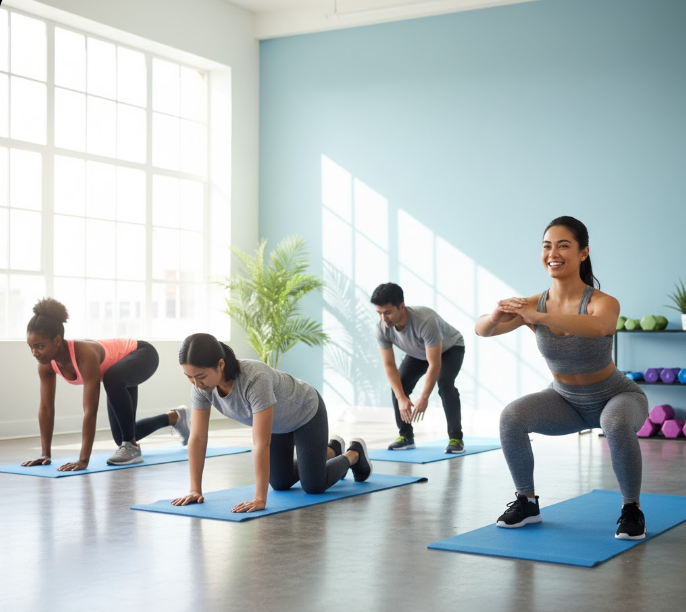
When to Level Up Your Routine
What does it mean when your exercise program that is easy enough to start becomes not so easy anymore?
Look for these signs:
- Exercises are comfortable during the time
- You do not feel a bit sore the following day
- You are able to speak without problems during the whole workout
- You end up feeling that you could have done a lot more
When this occurs, then it is time to move on. Add weight, more reps, less rest time, or more advanced variations.
Dealing with Setbacks
Life happens. You’ll miss workouts. You might get sick or injured. Maybe work gets crazy busy.
Failure does not nullify your gains. A week of failure will not set everything back. The thing is to resume normalcy as soon as possible.
Bring yourself back to working strength not with a leap. Lighten the load during a couple of sessions. It takes time to re-adjust your body.
The Psychological Perks You Will Feel
Physical changes take time. Mental advantages are faster manifested.
You will find yourself feeling better after only a single workout. Exercise brings secretions of endorphins, natural feel-good chemicals in your brain.
The frequency of exercises lowers stress. It improves sleep quality. Most individuals have said that they are more confident and capable of doing anything in life.
These psychological advantages can turn out to be much more significant than physical transformations. They make you come back even before you see any tangible changes. For more insights on maintaining a healthy lifestyle, visit https://cakvia.com.
Making It a Lifestyle
The final aim is not to finish a 12-week program. It is developing lifelong fitness.
No longer consider exercise something that you must do. Begin to think of it as something you are lucky to do. With amazing things your body can do.
Uncover things that you truly like. Hate running? Don’t run. Love dancing? Make that your cardio. Fitness will bring happiness to your life and not a strain.
Your Next Steps
All that you require to begin an exercise regimen that is friendly to a beginner is now available. The knowledge is yours. The only thing left is action.
Start small. Devote only three sessions to workouts during the week. Mark a particular date on your calendar. Take these appointments as any other significant obligation.
Wait not until the time is right. You will not be getting more motivated the following Monday. Yesterday was the most appropriate time to begin. The second-best time is the present time.
The body is able to change amazingly. All professionals were beginners who chose to begin. Today is your day to begin.
Take a deep breath. Lace up those sneakers. Do your first workout. Then do another. Then another. You’ll be surprised to find yourself looking back at a long way you have gone.
The road to the top is a mile long and it starts by taking one step. Take that step today.
Frequently Asked Questions
What is the frequency with which a total beginner should train?
Begin with three days a week such as Monday, Wednesday and Friday. This will allow your body to rest and recover in between sessions. When you become stronger in 4-6 weeks, you can add a fourth day.
How much time is appropriate on workouts?
The initial goal should be 20-30 minutes without counting the warm-up and cool-down. It is a question of quality rather than quantity. An intermittent 25 minutes workout wins over a distracted 60 minutes workout.
Is soreness after exercise a normal condition?
Yes! Light muscle fatigue during the 24-48 hours after exercise is totally natural, particularly during the initial stage. This is referred to as DOMS (Delayed Onset Muscle Soreness). Nevertheless, pain during exercise that is sharp is not typical and indicates that one should cease. According to the Mayo Clinic, understanding the difference between muscle soreness and pain is crucial for safe exercise.
Will a basic exercise program lose me weight?
Exercise assists in the formation of a calorie deficit and nutrition contributes a larger portion to weight loss. You should complement your exercise program that is easy to follow with a healthy diet. The rule of thumb is 70 percent nutrition, 30 percent exercise.
What, in case I am able to do not even one push-up?
That’s perfectly fine! Begin with push-ups against the wall or knee push-ups. People all start at various levels of fitness. The object is improvement, not excellence. Your practice will produce results in an amazingly short time.
Should I exercise when tired?
It is determined by the kind of tiredness. Light exercise usually works well in case you are mentally exhausted or stressed. When you are physically tired, are sick or your body is in a very sore state, rest on a day. Listen to your body’s signals.
Do I need to count calories?
Not necessarily at first. Pay attention to the consumption of whole foods, sufficient protein intake and hydration. It is not necessary to monitor calories in order to achieve certain objectives as you increase in level, though you may consider it beneficial.
How long until I see results?
The results will take place practically instantly – you will feel much better, more energetic, and sleep better. The physical changes are the typical ones that occur following 4-6 weeks of regular work. It is worth remembering that sustainable changes are not quick. Believe in the process and remain consistent.