
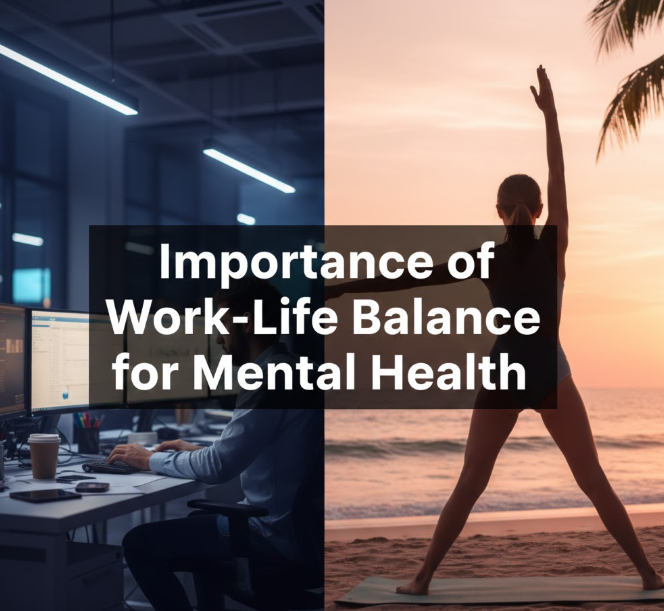
Imagine this: it is 9 PM, you are at your desk, your meal is cold, and you have missed another family occasion. You even get work emails on your phone during weekends. Sound familiar? You’re not alone. Millions of individuals have difficulties in establishing the balance between work and life.
Balance between work and life is not a fashionable term thrown around in office meetings. It is about making life such that your job does not take up all hours of your life. It is time to do the things that are the most important, such as dinners with the relatives, leisure activities, sports, and even doing nothing without a sense of guilt.
The boundaries between professional and personal lives are now unclear in the modern globalized world where people are always connected. Email or messaging apps allow your boss to communicate with you whenever he feels like. It is now more important than ever to find balance. Once you strike this balance, everything will be better: you will be healthier, you will have better relationships, you will perform better in your job and you will be happier.
This paper will demonstrate why work-life balance is such a big issue and why it influences every aspect of your life. You will be taught to apply more practical approaches to improve balance and appreciate the consequences of having work as the main focus of all things.
Why Balance is the Key to Your Health
Your body is not meant to be a machine and work 24/7. Working life takes serious hits when it is the leading life in your physical and mental wellbeing.
Overworking Causes Physical Health Problems
Excessive hours of work with no rest result in true health complications. Your body begins indicating warning signs that something has to change.
When you work all the time, stress hormones do not spare your system. The hormones increase your blood pressure and lower your immune system. This implies that you become ill more frequently and slow to heal.
Sleep deprivation becomes a normal situation when work prevails. You are spending the night working on assignments or rising early in the morning to be at work. Sleep deprivation impacts all aspects of your life: the quality of your memory, judgment, and even your weight. Research indicates that individuals who fail to sleep tight enough are prone to being overweight or developing diabetes.
Exercise is pushed to the background. You say that you will exercise tomorrow however tomorrow will never arrive. Lack of movement causes weakening of the muscles, poor heart and further loss of energy.
Mental Health Matters Too
How bad can your mind be when you lose balance. The issues of mental health creep into the picture until they become severe.
Burnout exists and is harmful. It is not only being exhausted at the end of a workday. The burnout implies that you are emotionally exhausted, disidentified with your work, and you can do nothing. Burnt out people tend to get hopeless and lack the ability to see the value in their work.
The level of anxiety and depression is increased among individuals who work too many hours. Your mind requires a rest to refresh the emotions and restore energy. Lack of it stores bad emotions like dirty laundry in a corner.
When you are mentally drained, your creativity and ability to solve problems go down. Most of the time, the best ideas are achieved when the mind is at ease, not when one is sitting in front of the computer monitor during the tenth straight hour.
What Change Balance Brings to Your Relationships
There are people out there who require your attention and time. The relationship between work-life balance and the level of relationship strength and healthiness is direct.
Family Relationships Become Strengthened
Your relatives want to have fun time with you rather than see you lying on the couch after working 12 hours.
Present parents are particularly needed by children. They do not simply require a person to pay bills. They require a person who can listen to their tales, assist them in their assignments, and play games with them. The lack of such crucial events as school plays or soccer games causes a gap that would be difficult to bridge in the future.
You have to pay attention to your partner or spouse. There are no relationships that can remain strong without any effort or time. The connection is maintained by date nights, discussions and common activities. When job and career are the priorities, bitterness develops and relations are ruined.
Balance in relationships even with extended family is useful. Meeting the parents, family functions and being there when needed makes these bonds stronger.
Friendships Need Nurturing
The people who become your family are friends, and they must receive your time as well. Friendship does not occur automatically, it needs frequent communication and experiences.
Without attending to any of the plans, you keep on making excuses that you have to work, and after some time, people no longer want to invite you. They learn once or twice, yet not each time. Soon enough you lose those friendships.
Good friends are a source of emotional support in the difficult moments. Friends give you another view, make you laugh and make you remember that there is more in life than working. These are valuable relationships that should be guarded.
Socialization among friends lowers stress and enhances happiness. Having a cup of coffee, going to sports or being together, they recharge your emotional batteries.
Your Performance at the Workplace Actually Goes Up
This may sound counter intuitive, but the less you work, the better you may be in your job. There is no time when quantity will beat quality.
The More the Rest, the More the Productivity
There are only so many periods when your brain can be in full concentration. Thereafter, your productivity is lost drastically, although you are still at your desk.
Breaks help to refresh your mind. A few short walks, having a lunch out of your desk or even shutting your eyes a couple minutes can help. When you get back to work, you are able to think better and work quicker.
Employees who are rested do not make many mistakes. Brains that are tired do not notice crucial details and make bad decisions. A single error brought about by tiredness is more expensive than a decent break would have been.
When your mind is not too busy, creative solutions just come up. During leisure time, some of the best business ideas have been brought to the minds of people as they spend their time on holiday or out in the hobby of their choice. Even in cases where you are not thinking about a problem, your subconscious is busy working on the problem.
Job Satisfaction Rises
Individuals that enjoy good work life balance enjoy their job even more. They do not hate their work environment since it does not take up their whole life.
When you get time to do something you love when you are not on the job, then you get refreshed energy and excitement to work. Work is then only one part of your life and not your entire life.
Loyalty among the employees is enhanced when the companies are respectful to the personal time. Employees can remain longer in the firms that appreciate balance and encourage good boundaries. This saves companies expenses incurred in recruiting and training new employees.
Burnout causes people to drop out of jobs. No money can be given to lose your health and happiness regardless of how good the pay is. Due to bad work-life policies, companies lose quality workers.
Balance and Its Financial Benefits
Money is one thing but work-life balance may actually benefit your finances in a very surprising manner.
Healthcare Costs Drop
Diseases related to stress are very expensive in terms of medical expenses. The doctor visits, medicine and treatment are expensive and accumulate fast in the case of health complications that arise through overworking.
When you have time, then preventive care can be achieved. Checkups, medical visits and treatment of minor problems that are at the initial stages before they develop into big problems are money saving in the long run.
Treatment of mental health costs a lot. Anxiety or depression therapy, counseling and medications cost hundreds or thousands of dollars. These issues are much cheaper to prevent by means of greater balance.
Long-term Financial Planning
Individuals who are balanced think better about their future on the financial side. Lack of enough rest culminates in unplanned behavior and unsound financial choices.
When you are not under constant pressure, you make wiser decisions on how to spend your money. When your life is more satisfying and balanced you will be less likely to spend money on stress and do some emotional shopping.
Balance enhances career longevity. Being burnt and forced to spend much time out of the office (or leave completely) hurts your income potential. Sustainable practices in the workplace safeguard your decades-long career.
Impact Comparison Table
| Area of Life | Poor Balance | Good Balance |
|---|---|---|
| Physical Health | Sickness, tiredness, weight gain | Vigor, strength, wellness |
| Mental Health | Anxiety, depression, burnout | Clarity, happiness, calm |
| Relationships | Distance, conflict, loneliness | Connection, support, love |
| Work Performance | Accidents, poor quality | Efficiency, creativity, quality |
| Finances | High medical bills, bad choices | Stability, savings, wise choices |
Creating Your Own Balance
The importance of balance is not a simple thing to know. You now require some real life plans in order to actually do it in your life.
Set Clear Boundaries
Boundaries refer to the rules that you set to safeguard your time and energy. Without them, work oozes into all of your life.
Set up certain work hours and adhere to them. When you are expected to be over at 5 PM, switch off the computer and quit checking mail. You will find your work there tomorrow.
Make your boundaries clear to your boss and colleagues. Make them aware of your availability and unavailability. Limits will be respected once you make them known to most reasonable individuals.
Establish physical barriers as well. In case it is possible, get a separate area at home. Once out of that space, that is finished with work. This division assists in changing modes on your brain.
Learn to Say No
You cannot do everything, and you will just wear yourself out. The skill of saying no helps to save time and energy.
Consider requests before committing to them. Question yourself: Is this absolutely necessary? Does it conform to my priorities? Can someone else handle it?
Get used to saying no in a polite way but not weakly. It is possible to refuse without being too rude or having a complicated excuse. A mere “I cannot take that on at the moment” will do just fine.
It is important to keep in mind that each yes to something is no to something else. By agreeing to additional work projects, you are saying no to time with the family, leisure activities or sleep.
Prioritize Self-Care
Caring for yourself is not selfish or lazy. It is vital maintenance, which makes you operate in all spheres of life.
Make personal things schedule-wise, as they are important things. Schedule exercise time, hobbies and relaxation. Take these obligations as they are business meetings.
Get enough sleep every night. The average seven to nine hours are required by adults. Sleep cannot be skipped without any punishment. Make it non-negotiable.
Have the right food rather than taking junk food at your office. Nutrition impacts your energy, your mood and stress coping. Go on real lunch breaks off work. For more tips on maintaining wellness, visit Cakvia for helpful resources.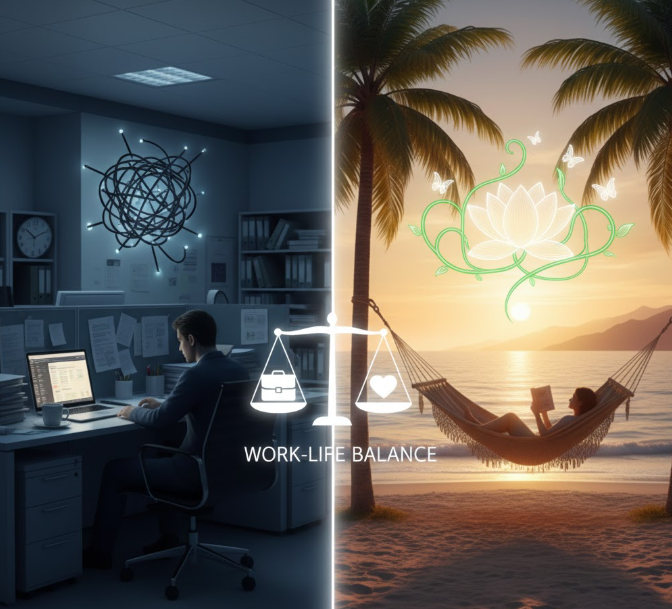
Use Technology Wisely
Technology links us together and at the same time it is more difficult to unlink with work. You must have the technology at your call rather than the other way round.
Switch off work when having personal time. You do not have to have your phone buzz with every email. Check the messages at specific intervals, instead of checking it day and night.
Uninstall business applications on your phone where you can. In case you need it, apply the use of do not disturb modes during weekends and evenings.
Automatic response to email when on vacation. Inform people that you are not around and you will not be replying. Then actually don’t respond.
Find Time for What You Love
Outside work hobbies and interests are essential in creating balance. They do provide you with something to look forward to and recharge.
Make time to do things that you enjoy. These activities are important whether one is reading, playing football, listening to music, making art among others. They are not luxuries that you can consider only when you have free time.
Experience new things, acquire new skills. By enrolling in a course, becoming part of a club, or taking a new hobby, you tend to have new challenges that are not work-related. This is activating other sections of your brain.
Spend time in the natural world. Exposure to the natural environment helps eliminate stress, boost mood, and gain perspective. Even brief strolls in parks make a difference. According to the American Psychological Association, spending time in nature is one of the most effective ways to reduce stress and improve overall wellbeing.
What Occurs in the Event of the Loss of Balance
It is possible that by understanding the effects of not taking the balance between work and life seriously, you will be motivated to consider it.
Personal Life Falls Apart
Work takes everything away and as a result, your own life falls into shambles.
It is as a result of neglect in relationships that they get worse. Spouses feel isolated and insignificant. Children are brought up to believe that work was more important than they were. Such ruined relationships are difficult to fix in future.
It disappears all in terms of hobbies and interests. You cannot recall when you had done anything simply because you wanted to have fun. Life is a matter of survival and not flourishing.
It loses your sense of identity. You turn into what you are called at work. When you make your whole self at work who would you be otherwise?
Health Crisis Develops
The neglect of balance will eventually cause severe health crises that will put you to a stop.
Heart attacks and strokes occur to individuals who work very long hours and lead a life full of stress. There is only so much that your body can absorb before something falls apart.
When stress goes beyond manageable levels, they result in mental breakdowns. There are individuals who just cannot work anymore and require a lot of time to rest.
Stress and bad lifestyle practices lead to the development of chronic diseases. Stress is one of the causative factors of diabetes, high blood pressure, and autoimmune disorders.
Career Damage Results
It is ironical that giving up to your career may end up ruining it.
Burnout makes you quit your job or even your profession. Others became burnt to the extent of having to switch careers altogether.
When you are exhausted and thus irritable, unreliable or useless, your reputation suffers. Colleagues and customers will observe when you are not performing.
Opportunities slip by your side since you are too tired to take chances. Promotions, new projects and career development need energy and enthusiasm that you are not there.
Balance Should Also Be Supported by Companies
It is not only individual workers who have to create work-life balance. Employers contribute immensely to the fact of impossible or possible balance.
Smart Business Practices
Companies that think ahead realize that balance is good for their bottom line.
Such flexible working arrangements as remote working or an ability to work at odd hours can assist employees in managing their lives. Stress is reduced when individuals are able to move the schedule when there is the need to attend to family or personal engagements.
Generous time-off allowances promote real vacations. Unlimited vacation will be wonderful but only in case the culture within the company has been encouraging towards the use of unlimited vacation.
Workload expectations are reasonable and burnout is avoided. Nobody is frequently obliged to work on 60+ hours every week to stay in tune with their job requirements.
Cultural Shifts Needed
In addition to policies, a culture of balance should be appreciated in the workplace to achieve actual change.
Leaders ought to be a good example and demonstrate healthy boundaries. When bosses do not work excessively long or on holidays, employees feel sanctioned to do the same.
End the glorification of overwork and hustle culture. Rewarding those who overwork sends the message that they are supposed to work more and it is highly appreciated.
Keep in touch on workload and stress. It is important that managers are honest in their discussions whether expectations are realistic and sustainable.
Big Differences are Small Changes
You do not have to totally transform your life in one day. Minor changes will result in great changes in the course of time.
Daily Micro-Habits
Minuscule daily shifts bring forward momentum towards improved balance.
Take an actual lunch hour each day. Get out of your work area and literally eat with your eyes open. This hour and a half payback in afternoon output.
Check in with yourself. Question: Did I take good care of myself today? What would be one thing that can help me balance currently?
Close your day at work with some ritual which indicates the time of transition. Switch out the attire, get some air or do something that will definitely define the end of work and the beginning of personal time.
Weekly Adjustments
Take a bigger view of your week so that you can have balance throughout the seven days.
Take at least one day free of work a week. Guard this day against any work intrusion. Take it as a break, entertainment and bonding.
Planning time with valuable individuals. Book family dinners, date nights, or friend gatherings on your calendar, but not in pencil.
Check your time log periodically. Monitor the location of your hours. You may be amazed by the time wasted or spent on matters that are not important.
Frequently Asked Questions
What is the definition of work-life balance?
Work-life balance refers to scheduling your time and resources in a way that does not make your occupation dominate your personal life. It concerns the sufficient amount of time and energy to work, family, friends, hobbies, rest, and self-care. Balance is a personal matter depending on the values and situation of the person.
What is the number of hours that I am supposed to work every week?
The majority of the studies indicate that it is effective in the long-term at 40-50 hours per week. Working above 50 hours regularly is more risky to health and less productive. Nevertheless, this is the number that is right based on the type of work you have to do, your personal needs, and what you are comfortable doing without hurting your wellbeing.
Is perfect balance possible?
The ideal balance on an everyday basis is not realistic and unachievable. There are days or weeks that will be work-intensive and there are those that are more on personal life. The objective is to get a fair balance in the long run and not perfection within 24 hours. Balance is moving and not static.
What in case my work requires hours of long work?
There is an overwork phase in some professions, yet they are not sustainable. Discuss workload issues with your employer. Also seek efficiency gains. In case the job continuously compromises your health and relationship, this may be the time to think whether it is right in the long run.
How could I persuade my boss that balance is important?
Evidence currently available shows that the more employees are relaxed, the more productive, creative, and loyal they become. Complain not only but suggest specific solutions. Demonstrate how a reasonable limit will actually make your work better. Whether your employer totally rules out the issue of work-life balance, this is an indicator of bad omen in the organization.
Is it possible to have work-life balance with children?
It will need planning and flexibility, yes. Share house and childcare responsibilities with your partner or support system. Make achievable expectations regarding what you can achieve. Also, it is worth remembering that it is more important to be available during the crucial moments of your children than to be a perfect one all the time.
What if I love my work?
It is great to love what you do, and yet you must have balance. Even the pleasant work will lead to stress and exhaustion when it does not end. Your job should not be the basis of what makes you who you are. Develop other interests and relationships to stay balanced and in perspective.
What is the time of making an improvement in the balance?
Minimal changes can be made instantly when you begin to establish limits and focus on other things. Considerable changes in your lifestyle in general may require months of time as you learn new habits and change expectations. Give yourself time to get through this transition.
Moving Forward with Balance
One of the most essential things you can do for yourself is to create the work-life balance. It influences your health, relations, career and even happiness. In our over-connected world of work-life, the significance of work-life balance cannot be overestimated.
Start small but start today. Select one or two of the strategies of this article and apply them this week. Perhaps it can be a switch off of work notification after 6 PM or a regular date. Little things will result in great changes in the long run.
It is important to keep in mind that balance does not consist in dividing your time 50/50 between life and work. It is about getting sufficient of both such that neither is too deprived. The needs will vary according to the various life stages, and your balance must change accordingly.
You have a right to a life, your life should have significant work and significant personal experiences. It is not all about your job despite its significance. Outside work makes life rich and worthwhile in the relationships, the health that you develop, and the experiences you have.
Learn to manage your time and energy. Set boundaries. Say no when necessary. Take care of oneself first. Your future self will be grateful to you because you have taken such a step today and not when your health failure or relationship disaster makes you do it.
Work life balance is not just important to you but to other people as well. In modeling healthy boundaries, you allow others to do so as well. You may motivate colleagues, friends or relatives to positively transform their lives.
Life is short and precious. You are always on the job and you don’t want to miss it. Your memories that you will look back to will not be of emails you replied to and meetings you have been to. They will be about moments in your life when you have been with people that you love, things that have made you happy, when you have actually felt alive and in the present.
Begin to make a better balance now. It is worth your health, relationships and even happiness.