Did you ever go and touch your toes and feel like your body is not cooperating? You’re not alone. Tight muscles and stiff joints make the life of millions of people a nightmare.
The good news? Flexible yoga poses can change your body in a way you have never thought possible. Yoga is a natural remedy whether you are an athlete who needs to enhance performance or you would simply wish to bend down without making noises.
Flexibility does not only mean being able to do the splits, or impressing your friends. It is all about living a carefree life, not being hurt and feeling comfortable in your own skin. With a flexible body, it is easy to perform all the daily chores, such as shopping for groceries or playing with your children.
This paper will guide you through the best yoga postures that do work. You will find levels of strength that are easy to do, know how long you will need to wait before you start seeing progress, and know how to make flexibility training a daily routine.
The Importance of Flexibility
Flexibility is the lubricant to your engine. In its absence, nothing is loose and easy.
When you are tight in your muscles, your body reacts unhealthily in other ways. You may get poor posture, back discomfort or get fatigued at the end of the day after doing something simple. There is a high risk of muscle pulling.
Good flexibility can be of aid in unexpected manners. It enhances your balance making people not fall when they grow older. It improves your blood flow, getting fresh blood to your muscles. It will even relieve stress by letting the strain you have in your body go.
This is a secret that athletes are aware of. The elastic muscles work better and heal quicker. Nevertheless, one does not necessarily have to be an athlete to enjoy the benefits. Better flexibility can help anyone to improve their quality of life.
How Yoga Produces Flexible Muscles
Flexibility involves yoga in a different way than conventional stretching. Yoga is not merely a pull on the muscles, it is a movement that is accompanied by breathing and mindfulness.
Whenever you are in a yoga posture, you are training your nervous system to unwind. The new position becomes safe and your brain begins to realize this. With time, you can stretch more into your body.
The breathing element is vital. Tension is signaled to be released in your body by deep, controlled breaths. This enables the muscles to lengthen without causing them to strain.
Flexibility also comes with strength which is built through yoga. The well-developed muscles support your joints and assist you in moving with a higher range of movement in a safe way. This combination eliminates overstretching injuries, which occasionally occur with other techniques.
What You Need to Know Before Starting
Before you leap into yoga postures in the pursuit of greater flexibility, it will be well to touch on a few fundamentals.
First, you must never overwork yourself. The stretching must be intense, however, not painful. There is a great distinction between good hurt and bad hurt. Learn to recognize it.
Second, consistency conquers intensity every time. Light stretches done in 15 minutes each day give better results as compared to one vigorous hour of stretches once a week.
Third, warm up your body first. Cold muscles do not stretch easily and they are highly prone to injury. Do a little light exercise such as walking or circling the arms prior to trying more profound exercises.
Lastly, do not be impatient with yourself. Flexibility is not developed immediately. It may take you many weeks before you can see the changes, and then you will find that you can now access places where you could not before.
Essential Yoga Poses That Will Increase Your Flexibility
We will investigate the strongest yoga poses to become more flexible. These are suitable to both the beginner and the experienced practitioner.
Downward Facing Dog: The Full-Body Stretch
This archetypal position elongates nearly everything simultaneously. Your hamstrings, calves, shoulders and back are taken care of.
Start on your hands and knees. Press your hands into the ground. Raise your hips vertically creating an upside down V with your body.
You do not have to put your heels on the ground, mainly not at the beginning. In case your hamstrings are tight, bend your knees. It is not about getting in a perfect position but to stretch your spine.
Hold this pose for 5-10 breaths. You will experience a tension in the back of your legs and on your shoulders. Do it every day and you will see your heels coming nearer to the floor.
Forward Fold: Strengthening the Hamstrings
Tight hamstrings are a problem to virtually everyone. This is a simple pose that addresses them.
Keep your feet at hip distance. Fold forward from the hips, not round at the waist. Hang loose with your upper body. You may place your hands on your shins, ankles, or floor, or at any point of natural access.
Remember to have a slight bend in your knees in order to guard your lower back. You must experience the pull in the back of your thighs and not the back.
Stay here for 10-15 breaths. As you breathe out, allow yourself to fold deeper. Never bounce or force yourself down.
Pigeon Pose: The Hip Opening King
There is a lot of tension in your hips. It is released in no better way than by pigeon pose.
Bring your right knee behind your right wrist on your hands and knees. Extend the left leg straight backwards. You should have your right foot close to your left hip.
Lower your upper body down over the front leg. You may rest either on your forearms or reach your arms forward on the ground.
This pose might feel intense. That’s normal. Hold 30 seconds to 1 minute with deep breathing per side. Your hips will thank you later.
Cat-Cow Stretch: The Spinal Mobilizer
This flowing motion will warm your whole spine and make it more flexible.
Start on hands and knees with a flat back. Inhaling, drop belly down, lift chest and tailbone up (cow pose). Exhaling, round your spine and tuck your chin (cat pose).
Switch slowly between these positions and do 10-12 rounds. Coordinate every motion with your breath. Such a gentle flow warms your spine for more serious stretches.
Seated Forward Bend: The Calm Lengthener
This is a pose that will extend your complete back body and relax your mind.
Sit with straight legs in front of you. Flex the feet such that the toes are facing towards the ceiling. Breathe in and lengthen your spine. Breathe out and fold forward from your hips.
Reach where you can—shins, ankles, feet. Don’t round your back to go deeper. Keep your spine long.
Hold for 15-20 breaths. This is a restorative pose that enhances the flexibility of hamstrings and also instills patience in you.
Butterfly Pose: The Inner Thigh Opener
The inner thighs (adductors) are usually neglected. This position targets them.
Sit on the floor and touch the soles of your feet together. Let your knees fall to the side. Use your hands to hold your feet.
You can use your elbows to press your knees toward the floor gently. Don’t force them. All you need to do is apply gentle continuous pressure.
Sit tall through your spine. You may remain upright or fold forward to make more of a stretch. Hold for one to two minutes.
A Complete Flexibility Routine You Can Do
This is how to make these poses a great practice.
| Time | Pose | Duration | Focus Area |
|---|---|---|---|
| 0-2 min | Cat-Cow | 12 rounds | Spine warm-up |
| 2-4 min | Downward Dog | 10 breaths | Full body |
| 4-7 min | Forward Fold | 15 breaths | Hamstrings |
| 7-11 min | Pigeon (both sides) | 1 min each | Hips |
| 11-15 min | Seated Forward Bend | 20 breaths | Back body |
| 15-17 min | Butterfly | 2 minutes | Inner thighs |
Total: 17 minutes
This 17-minute workout targets all of the larger muscle groups. It is best practiced every day but at minimum 4-5 days a week.
Advanced Poses for Those Who Have Been Practicing
These challenging poses help you go the extra mile when you have mastered the basics.
King Pigeon: The Ultimate Hip Stretch
This extreme pigeon pose stretches both the hip flexors and quadriceps.
Start in pigeon pose, then bend your back knee and reach back to hold onto your foot. Draw your foot in the direction of your buttocks with your hips facing straight forward.
This is a pose that involves a lot of hip extension. Don’t rush into it. Spend several months practicing regular pigeon pose beforehand.
Splits: The Flexibility Benchmark
Splitting is a dream of many people. Through practice, the majority of individuals can attain them.
Start in a low lunge. Slide your back leg backwards and slide your front foot forward. Use blocks under your hands for support.
Only go down as far as you can without suffering. Hold for 30 seconds to a minute. Practice both sides equally.
Progress slowly with splits. Excessive pushing may end up being very dangerous. Be happy with even minor gains instead of rushing to the final position.
Pitfalls That Must Be Avoided
These are the mistakes that should be avoided in order to become flexible quicker and safer.
Holding your breath: When you hold your breath, the muscles contract. Focus on long, slow breathing in each pose.
Comparing to others: Every body is different. There are individuals who are inherently flexible. Track your own progress and never compare yourself with anyone else.
Skipping rest days: Your muscles need time to adapt. Overuse injuries may be caused by intense stretching every single day. Have a minimum of one rest day per week.
Pushing into pain: Pain is your body’s alarm. Respect it. Gentle, steady stretching is always better than forcing.
Neglecting strength: Being flexible without strength can be dangerous. Include some strengthening in your practice to support your increased range of movement.
What Is the Timeline Before You Can See Results?
This is the question everyone asks. The answer lies in a number of factors.
Your starting point matters. When you are very tight, first gains are soon to be realized. Within two weeks, you may be feeling the difference. When you are already a bit flexible, you will experience development slower.
Your age plays a role too. Flexibility is built up more rapidly by younger people though it can be built up by people of any age. It may only require more time and patience as you grow older.
The largest factor is consistency. Daily practice yields much better results than intermittent efforts. Even 10 minutes a day beats one hour once a week.
The majority of individuals notice significant changes in 4-6 weeks of consistent practice. After three months, friends would begin telling you that you are much more flexible now. Six months down the line, you will be amazed at how you have changed.
Developing Your Own Flexibility Plan
Create an ideal routine to suit your life and your objectives.
Assess your current flexibility: Determine where you are the least flexible. Can’t touch your toes? Focus on hamstrings. Tight hips? Prioritize hip openers.
Set realistic goals: Select specific and measurable goals. “Touch my toes in two months” is better than “get more flexible.”
Schedule your practice: Make it a priority. Morning yoga experiences are different compared to evening practice—experiment to discover what you like.
Track your progress: Take notes or photos. Small improvements that happen daily are difficult to see, but when you look back, you will see how much you have really improved.
Make adjustments as necessary: If something hurts, modify it. When one pose becomes too comfortable, deepen the pose or increase the duration.
Yoga Poses for Specific Body Parts
These are specific strategies to focus on your trouble areas.
For Tight Shoulders
Flexibility of the shoulder influences your posture and your sleep quality.
Try eagle arms: Cross your arms and press your palms together. Raise your elbows and experience the stretch on your upper back. Hold for 30 seconds on each side.
Thread the needle will also perform miracles. On your hands and knees, slide one arm under your body and rest on your shoulder. This is a rotating movement that relieves shoulder and upper back tension.
For Stiff Lower Back
Millions of people have discomfort in the lower back.
Child’s pose is gentle and effective. Sit back on your heels with your hips. Extend the arms forward and place your forehead on the ground. Take slow deep breaths for up to two minutes.
Supine twist also helps. Lie on your back, draw one knee to your chest and then let it fall over your body. Keep your shoulders on the ground. This relieves lower back and hip tension.
For Tight Calves and Ankles
These forgotten parts influence your overall posture.
Hold downward dog with bent knees, and then alternately pedal with your feet. This massages your calf muscles and your Achilles tendons.
Toe stretches help too. Tuck the toes under and sit back on the heels. This intense exercise enhances the flexibility of the ankle and the health of the feet.
The Science of Flexibility Training
Let’s see what really goes on in your body when you are practicing yoga poses to become more flexible.
Your muscles have special sensors which detect stretch. These sensors send information to your brain when you settle into a yoga position. At first your brain reacts by contracting the muscle to protect it.
Your nervous system learns that these are safe positions through regular practice. It slowly allows your muscles to lengthen. It is this neural adaptation which makes flexibility enhance with practice.
There is also a change in your connective tissue. The fascia, or web of tissue which surrounds your muscles, can stiffen in the absence of movement. Through yoga, this tissue is slowly rehydrated and loosened, which increases mobility.
The blood flow to the stretched muscles also increases, delivering nutrients and eliminating waste products. This enhanced circulation accelerates healing and reduces soreness.
Combining Yoga with Other Activities
Yoga flexibility training goes hand in hand with other exercise methods.
For runners: Yoga can eliminate the tightness developed in the course of running. Target hamstrings, IT bands and hip flexors. Practice yoga on rest days or after easy runs.
For weightlifters: Improved flexibility improves your lifting range. It results in better form and development of muscle. Do yoga on non-lifting days.
For desk workers: Oppose sitting all day with yoga. Pay attention to hip flexors, chest openers and spinal twists. Even 10 minutes at lunch time makes a difference.
For the elderly: Gentle yoga keeps the body mobile and prevents falls. Combine balance training and flexibility training. Chair yoga provides a safe starting point.
Flexibility: Nutrition and Hydration
The food that you consume determines the flexibility that you are capable of achieving.
Hydration is crucial. Water is required to make your muscles and connective tissue elastic. Consume at least 8 glasses of water each day. Tissues are not very elastic when they are dehydrated.
Protein helps in muscle recovery. Eat quality protein foods because they assist the muscles to recover and adapt to stretching.
Anti-inflammatory foods will assist as well. Foods such as berries, fatty fish, and leafy greens will decrease the inflammation that could make you less flexible.
Magnesium is a natural muscle relaxant. This vital mineral is found in foods such as nuts, seeds and dark chocolate.
Monitoring Your Progress Toward Flexibility
Assessment keeps you motivated.
Sit and reach test: Sit with legs stretched out. Test how far you can reach beyond your feet. Retest monthly.
Shoulder flexibility test: Attempt to bring your hands together behind your back, one hand from above and one from below your shoulder. Measure the distance between your hands.
Hip flexibility test: Lie on your back and lift one leg straight up. How close can you get to 90 degrees? Track both sides.
Photo documentation: Take monthly progress photos in key poses. Seeing progress is very encouraging.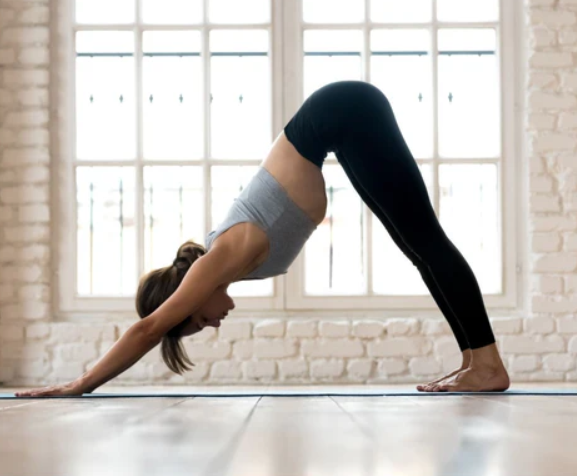
Frequently Asked Questions
How often should I practice yoga to achieve flexibility?
Daily practice is most effective, yet 4-5 times a week works well too. Regularity is more important than session length. Even 10-15 minutes daily beats one long weekly session.
Can I become flexible when I am naturally stiff?
Absolutely yes. Although your genes determine where you start, nearly everyone can vastly improve flexibility. It may take more time when you are naturally tight but with consistent practice there is always progress to be made.
Should I feel pain during stretching?
No, you must not feel sharp or stabbing pain. The stretching should create a feeling of slight discomfort or pulling rather than pain. If it is painful, ease back immediately.
Can I become flexible even in my 40s or older?
Absolutely. Flexibility can be enhanced by people of any age. You may not improve as quickly as a teenager, but with practice, you will improve significantly. Many individuals are more flexible in their 40s and 50s than they were in their 20s.
How long should I hold yoga poses?
To obtain flexibility gains, holds traditionally last a minimum of 30 seconds to 2 minutes. It takes your muscles time to relax and lengthen. Shorter holds will not give the same results.
Can yoga be an alternative to my regular stretching?
Yes, yoga could be your comprehensive flexibility program. It incorporates stretching, strength, balance, and mindfulness—so it is more extensive than classical stretching alone.
Why am I more flexible on certain days but not others?
This is completely normal. Flexibility depends on factors such as hydration, stress levels, time of day, recent activity, and even the temperature. The majority of people are more flexible during evening hours compared to morning hours.
Should I warm up before doing yoga?
Yes, warming up is beneficial in minimizing injury risk. Warm up with 5-10 minutes of light exercise such as walking, gentle twists or dynamic stretches before attempting more challenging poses.
Your Flexibility Transformation Journey
Yoga poses for flexibility will provide you with an effective route to a more freely moving, more relaxed body. You know the most important poses, know how to practice safely, and how to make it your own routine.
The journey from being stiff to being flexible is not overnight and yet it is very rewarding. Week after week, you will see small wins—you will go a little further, feel a little less tight, move a little easier.
Begin today with one or two poses. Practice them tomorrow. Add another pose next week. Soon you will have a complete flexibility practice which will transform your body.
Flexibility does not mean being perfect or pretzel-like. It is about enjoying being in your body and moving through life with ease. Every stretch that you perform is an investment into your future health and comfort.
For more wellness tips and resources, visit Cakvia.
The yoga mat is waiting. A few minutes of regular practice will bring you to a much more relaxed version of yourself. Start today—your body will thank you for years to come.
For evidence-based information on flexibility training and its benefits, consult resources like the American College of Sports Medicine for scientifically-supported exercise guidelines.