
Protein is an essential element in the human body, particularly among vegetarians. This paper will discuss the importance of protein to vegetarians.
Diets that are vegetarian are not as difficult in getting enough protein as many people imagine. Protein is required in your body to build your muscles, repair your tissues and maintain your immune system. The good news? Plants are rich in protein to provide.
A number of vegetarians fear that they will not be getting the full meal without meat. This worry is outdated. Current theorizing on nutrition demonstrates that a vegetarian diet can supply all the protein that your body requires. All you need to do is to understand what to eat and the way to mix it.
This reference will demonstrate the most appropriate protein sources available to vegetarians. You are either a new vegan eater or need some variety in your diet, and you will find some sensible choices that not only taste good but also keep your organism going.
How Much Protein Should You Really Have?
And now, before we get down to particular foodstuffs, numbers. The daily protein requirement of an average adult is approximately 0.8 grams per kilogram of body weight. It implies that an individual with a weight of 150 kg requires about 55 grams of protein per day.
Sportsmen and extremely active individuals require more. When exercising, target 1.2-2.0 grams per kilogram. Pregnant women, teens and the elderly also require more protein.
The key point? These quantities are quite possible on a vegetarian diet. You do not have to consume meat to meet your protein target.
Dairy and Egg-Based Product Champions
Greek Yogurt: The Fat-Free Protein Powerhouse
Greek yogurt is one of the highest sources of protein that a vegetarian can consume. One cup provides an average of 20 grams of protein. That is almost half of what a number of people require in a day.
Ordinary yogurt contains less protein, typically approximately 9 grams per cup. Greek yogurt protein is concentrated through a straining process that produces the yogurt. This renders it viscous, creamy and very satisfying.
Have Greek yogurt at breakfast with nuts and berries. Replacement of sour cream on tacos. Blend into smoothies to add an additional creamy protein.
Cottage Cheese: Simple and Satisfying
One half-cup of cottage cheese has approximately 14 grams of protein. It is light, versatile and it goes well with sweet and savory foods.
Cottage cheese is consumed by many people as a snack with fruit. Another thing you can do with it is to add it to pasta meals or to lasagna, or to whole-grain toast. The small curds are very easy to blend into the recipes and they provide the protein but do not alter the taste significantly.
Low-fat products contain a little more protein as compared to full-fat products. Eat at your own discretion and your preferences.
Eggs: The Ultimate Protein Pack Offered by Nature
The protein content of one large egg is 6 grams of high-quality protein. Vitamins D and B12 are also found in eggs and vegetarians often have difficulties finding enough of these vitamins.
Egg protein is said to be complete, which means that it is complete protein and has all of the nine essential amino acids that your body is unable to produce internally. This makes eggs particularly precious among vegetarians.
Bake them, scramble them or boil them into food. Eggs can be used in any day meal. One two-egg breakfast provides you with 12 grams of protein immediately.
Milk and Cheese: Daily Protein Shots
One cup of milk contains 8g of protein. Cheese differs in a range of varieties but the majority of hard cheeses provide 6-7 grams per ounce. The list of good sources of protein includes mozzarella, cheddar, and Swiss cheese.
Put in oatmeal, coffee or smoothies with milk. Add cheese sprinkles on vegetables, salads, or whole-grain crackers. These little additions in the daytime are quickly added up.
The Legumes: Superstars of Plant Proteins
Lentils: Frugal Protein Superheroes
Lentils are worthy of being singled out. A single cup of cooked lentils has 18 grams of protein and would cost pennies a serving. They are cooked in less time as compared to most beans and do not require pre-soaking.
Lentils are soft and golden in color when cooked, good in soups and curries. Brown and green lentils are more resistant to shape thus suitable in salads and as a side-dish.
Iron, folate and fiber are also found in lentils. They keep you full all hours and they assist in stabilizing blood sugar levels.
Chickpeas: The Multitasking Marvel Bean
Chickpeas or garbanzo beans contain 15 grams of protein in one cooked cup. They taste nutty and have an advanced texture that is applicable in millions of recipes.
Chickpeas can be roasted with spice and eaten as a snack. Mash them into hummus. Serve them in salads, soups or grain bowls. The opportunities appear infinite.
Chickpeas also have resistant starch which creates food for the good bacteria in your gut. This contributes to their being great for digestion.
Black Beans: A Personality Protein
Black beans provide 15g of protein per cup. Mexican and South American cuisine has been enamored with their rich and earthy taste.
Eat black beans in burritos, tacos and enchiladas. Eat them as black bean soup or in salads. They are also very well combined with rice in order to get a complete set of proteins.
Anthocyanins, strong antioxidants that nourish the heart provide the dark color.
Other Bean Champions
All types of beans such as kidney, pinto, navy and lima beans contain 13-15 grams of protein per cup. All the types taste and feel differently.
Store a number of varieties in your pantry. Canned beans are ideal when you are in a hurry. All you need to do is to rinse them to eliminate sodium.
Soy Foods: Whole-Protein Plant Food
Tofu: The Protein Chameleon
Tofu has 10-15 grams of protein in a half-cup, depending on firmness. Extra-firm tofu contains the highest amount of protein and silken tofu contains less.
The beauty of the tofu is in the versatility. It takes the flavors of whatever you cook it with. Squeeze the water, dice it and marinate it. Then bake, stir-fry, or grill it.
Silken tofu is used in the making of smoothies, pudding, and sauces. In stir-fries and sandwiches, meat has been substituted with firm tofu. Whether one plans to use it for dinner or lunch, once you know how to cook it, it will become part of your weekly menu.
Tempeh: Fermented Protein Power
Tempeh contains 15-16g of protein per half-cup. It is prepared by fermenting soybeans, and it is hard in texture with nutty and slightly bitter flavor.
Tempeh is simpler to digest as compared to plain soybeans, owing to the fermentation process. It also includes positive probiotics for the gut.
Thin slice tempeh and pan-fry it till crispy. Break it into ground meat for pasta. Grill it in barbecue and marinate it. The solid structure supports the assertive tastes.
Edamame: The Snack Worthy Protein
Edamame are young soybeans normally presented in their pods. A 1 cup of shelled edamame has 17 grams of protein.
Steam, sprinkle with sea salt and pop the beans directly into the mouth. Added to fried rice, salads or grain bowls. They also taste good chilled as a snack with a lot of protein.
Soy Milk: Liquid Protein Convenience
Fortified soy milk offers protein of 7-9 grams per cup just like cow milk. It is the highest protein plant milk that can be compared to dairy milk.
Apply soy milk to cereal or in coffee or in baking. Select plain items to eliminate added sugar. Calcium and vitamin D are also added to many brands.
Whole Grains and Seeds
Quinoa: The Gold Standard Grain
Quinoa is not really a grain, but we treat it as one. A single cup of cooked quinoa has got 8 grams of protein. Better still, quinoa is a complete protein containing all essential amino acids.
This renders quinoa a great asset to a vegetarian. It may be used as a substitute for rice, in salads or as breakfast porridge. The flavor is mild and slightly nutty and goes well with any cuisine.
Quinoa takes only 15 minutes to cook and it is fast compared to brown rice.
Oats: Morning Protein Boost
One cup of cooked oatmeal will give 6 grams of protein. Use milk instead of water and you will be close to 14 grams. Greek yogurt and nuts are even more of a boost.
Oats are also a source of beta-glucan which is a special kind of fiber that reduces cholesterol. They are filling, cheap and most importantly very versatile.
Prepare overnight oats, baked oatmeal or stovetop porridge. Oats are also used in blended beverages, protein balls and homemade granola as well.
Chia Seeds: The Miniature Packages of Proteins
The chia seeds contain 4 grams of protein in two tablespoons. It may not be much but the chia seeds are convenient to sprinkle over the food you are already consuming.
Add them to yogurt, oatmeal or smoothies. Prepare chia pudding by soaking the seeds and keeping them in milk overnight. The seeds absorb and form a gel-like substance.
Chia seeds are also a source of omega-3 fatty acids, which vegetarians should consume more of.
Hemp Seeds: Nutty Protein Boost
Hemp seeds contain 10 grams of protein in three tablespoons. They are soft-textured, light tasting and nutty.
Sprinkle on salads, yogurt, oatmeal with hemp seeds. Add to smoothies or energy balls. They do not require any preparation and bring a nice crunch.
Hemp seeds also contain omega-3 and omega-6 fatty acids in perfect proportion for athletes.
Nuts and Nut Butters
Almonds: Snack Protein Stars
One ounce of almonds (approximately 23 nuts) has 6 grams of protein. Vitamin E, magnesium and healthy fats are also found in almonds.
Prepare almonds as snacks to carry. Use them in trail mix or sprinkle them on salads. Almond butter is a great toast or apple spread.
Raw, roasted or sliced- almonds can be used in infinite ways.
Peanut Butter: Classic Protein Spread
A 7-8 grams of protein is contained in 2 tablespoons of peanut butter. The most nutritious peanut butter is one that has neither extra oils nor sugars.
Apply peanut butter to whole-grain bread, blend into smoothies or have with slices of bananas. It can also be applied in Asian flavored recipes and dressings.
Peanut butter is very satisfying, as it is a combination of protein and healthy fats.
Other Nuts Worth Eating
Cashews, pistachios, pecans, and walnuts contain between 4-6g of protein per ounce. All these are different types that provide different nutrients other than protein.
Walnuts are sources of omega-3 fatty acids. Pistachios contain lutein to take care of the eyes. Diversity is important, thus change the types of nuts every week.
Protein-Rich Vegetables
Green Peas: Unusual Protein Food
A 100 gram serving of cooked green peas provides 8 grams of protein. And that is better than most vegetables have to offer.
Pasta dishes, fried rice or curries may have added peas. They are sweet and colorful and children tend to enjoy them. Frozen peas are as good as fresh ones.
Spinach: More Than Just Iron
A cup of cooked spinach contains 5 grams of protein. The amount of raw spinach is far less since it has not been condensed by cooking.
Spinach can be sautéed as a side dish or mixed into omelets or can be used in smoothies. The bland taste is lost in most of the recipes and the nutrients are retained.
Broccoli: Green Power
A 100 grams of cooked broccoli has 4 grams of protein. Although it is not very big, broccoli is worth mentioning as it is a regular staple for people.
Roast broccoli with olive oil and garlic. Steam it and top with cheese. Add it to stir fries or pasta. Protein accumulates every minute.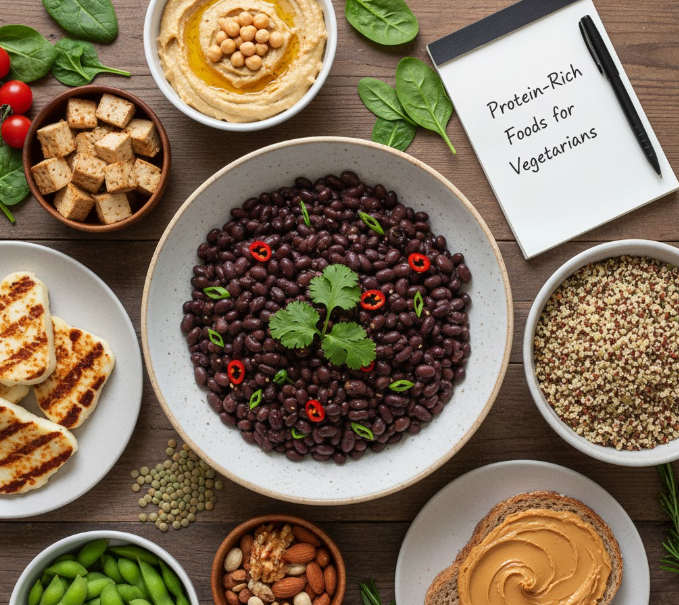
Complete Protein Combinations
Why Food Pairing Matters
Plant proteins are usually incomplete, i.e. they do not contain one or more essential amino acids. Proteins require all the nine essential amino acids in order to develop effectively in your body.
The solution? The mixture of plant foods during the day. This produces whole protein profiles.
On the list of traditional combinations that work, a few have been mentioned:
The combination of rice and beans constitute a complete protein. And so do peanut butter and whole-grain bread. Pita bread and hummus will do.
You do not have to consume such combinations in one meal. You just have to eat variety throughout the day and your body is able to mix the amino acids required.
Another good combination is lentil soup and whole-grain crackers. The oatmeal with nuts and seeds on top is all-inclusive.
High-Protein Vegetarian Diet Sample
Breakfast Options
Begin with Greek yogurt parfait: 1 cup of Greek yogurt (20g), 1/2 cup of granola with nuts (6g) and berries. Total: 26 grams of protein.
Or scrambled eggs: 2 eggs (12g), whole-grain toast (4g) and 1/2 cup of sautéed spinach (2.5g). Total: 18.5 grams.
Protein smoothie: 1 cup of soy milk (8g), 2 tablespoons of peanut butter (8g), 1 banana, and 2 tablespoons of chia seeds (4g). Total: 20 grams.
Lunch Ideas
Black bean burrito bowl: 1 cup black beans (15g), 1/2 cup quinoa (4g), vegetables, and 1 ounce of cheese (7g). Total: 26 grams.
Lentil soup: 1.5 cups lentil soup (12g), whole-grain crackers (3g), and side salad with chickpeas (4g). Total: 19 grams.
Tofu stir-fry: 1/2 cup firm tofu (10g), mixed vegetables, and 1 cup brown rice (5g). Total: 15 grams.
Dinner Suggestions
Tempeh tacos: 1/2 cup crumbled tempeh (15g) and corn tortillas (4g), beans (5g) and toppings. Total: 24 grams.
Chickpea pasta: 2 ounces chickpea pasta (14g), marinara sauce, and vegetables with 1 ounce parmesan (7g) on it. Total: 21 grams.
Veggie burger: Veggie burger patty (20g), whole-grain bun (5g), and side of roasted chickpeas (7g). Total: 32 grams.
Snack Choices
Cottage cheese and fruit: 1/2 cup cottage cheese (14g) is a good source of protein.
Trail mix: 1/4 cup almonds and cashews (7g) will keep hunger at bay.
Edamame: 1 cup of shelled edamame (17g) is a good snack in the afternoon.
Protein Content Comparison Chart
| Food Item | Serving Size | Protein (grams) |
|---|---|---|
| Greek Yogurt | 1 cup | 20 |
| Lentils (cooked) | 1 cup | 18 |
| Edamame (shelled) | 1 cup | 17 |
| Tempeh | ½ cup | 15-16 |
| Black Beans (cooked) | 1 cup | 15 |
| Chickpeas (cooked) | 1 cup | 15 |
| Cottage Cheese | ½ cup | 14 |
| Tofu (firm) | ½ cup | 10-15 |
| Hemp Seeds | 3 tablespoons | 10 |
| Quinoa (cooked) | 1 cup | 8 |
| Peas (cooked) | 1 cup | 8 |
| Milk | 1 cup | 8 |
| Soy Milk | 1 cup | 7-9 |
| Peanut Butter | 2 tablespoons | 7-8 |
| Cheese | 1 ounce | 6-7 |
| Eggs | 1 large | 6 |
| Almonds | 1 ounce | 6 |
| Oats (cooked) | 1 cup | 6 |
| Spinach (cooked) | 1 cup | 5 |
| Chia Seeds | 2 tablespoons | 4 |
| Broccoli (cooked) | 1 cup | 4 |
Protein Absorption: Tips on Gaining the Most Out of Proteins
Eat Vitamin C with Foods Rich in Iron
Plant-proteins are usually naturally fortified in iron; however, the absorption rate of plant iron by your body is low compared to animal iron. Improved absorption with vitamin C is dramatic.
Serve tomatoes with lentils. Add lemon juice to chickpeas. Take strawberries with your oatmeal. Such simple combinations do count.
Don’t Forget About Zinc
Zinc assists your organism in the utilization of protein. Pumpkin seeds, cashews, chickpeas, and lentils are good sources of zinc in a vegetarian diet.
By eating foods that contain zinc, your body will be able to utilize all the protein that you are ingesting.
Consider Protein Timing
The body is only capable of utilizing about 25-30 grams of protein at a time in building the muscles. It is better to distribute protein during the day than to consume it all at dinner.
Goal: 15-25 grams per meal, protein snacks in between meals.
Beliefs Regarding Vegetarian Protein
Myth: You Have to Eat Meat to Get Complete Protein
False. Quinoa, soy foods, chia seeds, and hemp seeds are a variety of plant foods that are complete sources of protein. Even the incomplete proteins mix freely throughout the day to provide you with everything you require.
Myth: Plant Protein is Inferior
Plant protein is able to build muscle as effectively as animal protein, at least as long as there is a sufficient amount. Studies indicate that vegetarian athletes do as well as those who eat meat.
It is not the source, but quantity and variety.
Myth: Vegetarians Can’t Get Enough Protein
The fact is that most vegetarians receive an abundance of protein. The average vegetarian diet has sufficient enough to sustain basic needs. You simply have to consciously make decisions.
For more nutritious plant-based recipes and meal ideas, visit Cakvia for inspiration.
High-Protein Vegetarian Shopping List
Items that you should have in the kitchen include:
Refrigerated Products: Greek yogurt, cottage cheese, eggs, tofu, tempeh, milk or soy milk, different cheeses.
Pantry Staples: Red, brown, and green dried lentils, black beans, chickpeas, kidney beans, canned beans, quinoa, oats, whole-grain pasta.
Nuts and Seeds: Almonds, cashews, walnuts, peanut butter, almond butter, chia seeds, hemp seeds, pumpkin seeds.
Frozen Foods: Spinach, mixed vegetables, edamame, green peas.
With these basics available, one can just make a protein rich meal with a little planning.
Frequently Asked Questions
Can Vegetarians Build Muscle?
Yes, absolutely. Vegetarians are in as good position to build muscle as meat eaters. Concentrate on consuming adequate total protein (1.6-2.0 grams per kilogram body weight), regular exercising of the body muscles, and caloric intake. A large number of bodybuilders and athletes are successful and are vegetarian.
Should I Take Protein Powder as a Vegetarian?
Protein powder is not necessary for most vegetarians. Whole foods are very rich in protein and other significant nutrients. Protein powder may be handy for athletes or highly busy individuals, but it is not a need for the majority of the population.
What is the Healthiest Source of Protein in Vegetarianism?
There is no single healthiest source. Variety matters most. Legumes are a source of fiber, soy foods are a complete source of protein, dairy foods give you calcium and nuts are an excellent source of healthy fats. The consumption of various sources of proteins during the week will see you having the nutrients your body requires.
How Can I Achieve Protein Requirements on a Small Budget?
The cheapest sources of protein are lentils, dried beans, peanut butter, oats and eggs. When you can, buy dried beans instead of canned. Greek yogurt store brands are worth purchasing. These plans ensure that the expenses are minimal yet the targets of protein are achieved.
Is the Consumption of Excess Soy Harmful?
No, moderate intake of soy is healthy and safe for the majority of people. It has been found that soy foods in the form of 2-3 servings a day do not pose any health hazard. Soy and hormone fears have been disproved by modern science. Tofu, tempeh, edamame, and soy milk are healthy choices. For more information on soy safety, check out the Harvard T.H. Chan School of Public Health.
Is a Vegetarian Diet Sufficient in Terms of Protein for Children?
Yes, children can thrive on a properly designed vegetarian diet. A developing child requires approximately 0.95-1.0 grams of protein per kilogram of body mass. Include foods high in protein at every meal, and provide high protein snacks. Children like Greek yogurt, cheese, eggs, nut butters, and beans.
Your Path to Protein Success
Proteins should not form an intricate puzzle, as creating a vegetarian diet rich in protein does not demand any complex planning and costly specialty items. The food items discussed in this guide can be found in any grocery store. Most of them are likely to be in your kitchen.
Begin incorporating one or two new sources of proteins into your weekly diet. Greek yogurt is something you should try. Try lentils in your favorite soup. Give tempeh an opportunity with a nice marinade.
You should also monitor your protein consumption over several days to determine your level. The majority of people are shocked to learn that they are consuming an increased amount of protein than anticipated. Take that as a basis of making minor changes instead of radical changes.
Do not forget that protein is not the only part of the nutrition puzzle. Consume a lot of fruits and vegetables, whole grains, as well as healthy fats. This balanced diet is good to maintain good health and make sure that you achieve your protein requirements.
The vegetarian diet is so diversified and tasty and offers great nutrition. Now, you have everything needed to build strong muscles, keep energetic and eat delicious food all without meat with the information presented in this guide.
Your body will be happy that you are feeding it with varied, high protein foods of plant origin. It is time to start today and pick one new protein source to have this week. Minor transformations result in permanent habits and permanent habits result in a healthier and stronger you.