

Healthcare is not something that begins when you become sick. It is a lifelong process which evolves with age. The good news? The appropriate habits and examinations can stop or detect many severe health-related issues early.
This guide breaks down the specifics of what you should know about preventive health at each age. Whether you are in your twenties or at your seventies, you will find handy tips that can make a difference in the way you feel today and the years to come.
Prevention Beats Treatment
Consider preventative healthcare as car maintenance. You replace the oil when it is time to replace it, maintain the tires and repair minor issues that can change to major issues. Your body works the same way.
By means of prevention, you can:
- Diagnose diseases at the onset when they are less complicated to treat
- Pay less later on high medical bills
- Wake up better and more energetic
- Have a better quality of life and longer to live
- Avoid painful or unpleasant therapy
Research indicates that individuals who engage in preventive health activities live an average of 7-10 years longer compared to those who do not. That is not only more years—it is more healthy years.
Your Twenties: Building Sound Foundations
Your twenties are the years when you establish a lifetime of health. You have a powerful and solid body, and your habits now will stay with you for decades.
Key Health Screenings
Although you think that you are invincible, some checkups are necessary:
- Blood pressure test: Every two years when normal
- Cholesterol test: This should be done at age 20 or younger, particularly when there is a family history
- Skin checkup: New or changing moles should be checked annually
- Dental cleaning: Every six months
- Eye check-up: Once every two years unless you use glasses
Everyday Health Habits
Your twenties is the ideal time to establish routines that are here to stay. Start with these basics:
Physical Activity: Aim for 150 minutes of moderate exercise per week. This may be brisk walking, swimming, or cycling. Include two muscle-strengthening sessions each week to develop muscle density and bones.
Sleep Schedule: Get 7-9 hours a night. This is the time that your brain and body need to restore and replenish. Establish a bedtime routine and follow it even during weekends.
Basic Nutrition: Fill half your plate with fruits and vegetables. Prefer whole grains to refined grains. Restrict processed foods and sweetened beverages. You may get away with eating anything at the moment because you have a fast metabolism, but bad eating habits will catch up soon.
Mental Health Check-ins
Your twenties may be a stressful period in terms of career choices, relationships, and discovering adult life. You should not overlook your mental health:
- See someone in case you are always anxious or sad
- Train in stress management methods such as deep breathing or meditation
- Form a circle of friends and family
- Limit social media when it leaves you feeling bad about yourself
Your Thirties: Staying Ahead of the Curve
In your thirties, you have more responsibilities, yet your health must be one of your priorities. It is at this stage that certain health problems begin to manifest, hence paying attention is important.
Important Medical Tests
These screenings should be added to your schedule:
- Diabetes screening: Every three years with average risk
- Skin cancer screening: Dermatologist check every year
- Thyroid test: This test is of particular importance to women
- Cervical cancer screening: Women should get a Pap smear every three years
- Physical exam with your doctor: Complete checkup
Managing Work-Life Balance
Most individuals in their thirties have busy careers and families. The following are ways to remain healthy amidst the chaos:
Prepare healthy lunches rather than going out to eat. Prepare meals on Sunday to save time on hectic working days.
Schedule exercise as you do a meeting. Mark it on your calendar and make it non-negotiable.
Take real breaks during work. Stand up and move away from screens every hour.
Family Health History
Your thirties is the ideal time to acquire knowledge about family health conditions. Information about whether your parents or grandparents had heart disease, cancer, or diabetes can assist your doctor in developing a customized prevention program.
Your Forties: Becoming Health Conscious
The big 4-0 marks a turning point. Your body does not bounce back from bad decisions as easily, and some health risks grow significantly.
Critical Screenings to Add
| Type of Screening | Frequency | Why It’s Important |
|---|---|---|
| Mammogram (women) | Annual | Early detection of breast cancer |
| Colonoscopy | Beginning at age 45 | Detects colon cancer and polyps |
| Bone density | Baseline for women | Checks osteoporosis risk |
| Prostate screening (men) | Discuss with doctor | Checks prostate health |
| Heart disease screening | As recommended | Assesses cardiovascular risk |
Weight Management Becomes Important
When you reach your forties, your metabolism slows down, and therefore gaining weight becomes easier. Being overweight exposes one to the risk of:
- Heart disease
- Type 2 diabetes
- Joint problems
- Sleep apnea
- Certain cancers
Focus on portion control, not strict diets. Slow down while eating and only eat until you become satisfied, not stuffed. Limit alcohol intake, which contributes empty calories and influences sleep quality.
Strength Training Is Needed
It is normal to lose muscle mass when aging past 40. Fight this with resistance training at least 3 times a week. You do not require any special equipment—exercises with your own body weight are excellent. Strong muscles support your joints, increase metabolism, and maintain independence as you age.
Your Fifties: Prevention Gets Personal
Your fifties require more personal health plans. What is effective for your friend may not be effective for you, as it depends on your risk factors and family history.
Closely-Monitored Health
Frequency of screening should be increased:
- Colonoscopy: Every 10 years, or more frequently if polyps are found
- Mammogram: Annually
- Bone density scan: Every two years for women
- Blood sugar tests: Annually
- Complete blood analysis: Monitor cholesterol, kidney, and liver function
Hormonal Changes and Management
Menopause occurs in women between ages 45-55. Men experience gradual testosterone depletion. Both cause real symptoms:
In women: Hot flashes, mood swings, insomnia, and decreased bone mass may occur. Discuss with your physician how to manage symptoms either naturally or using hormone therapy.
In men: Reduced energy, muscle mass, and mood fluctuations may manifest. Regular physical activity and proper nutrition are of great help.
Preventing Chronic Diseases
When you are in your fifties, chronic conditions usually develop. Take these steps seriously:
Heart Health: Check blood pressure and cholesterol regularly. Consistently use prescribed medications. Reduce sodium intake. Manage stress effectively.
Diabetes Prevention: Maintain a healthy weight. Exercise regularly. Prefer complex carbohydrates to simple ones. Get tested annually if you have risk factors.
Cancer Screening: Adhere to all advised screenings. See a physician in case of unusual symptoms. Don’t postpone appointments.
Your Sixties and Beyond: Maximizing Quality of Life
In your sixties and beyond, it’s not merely about increasing the length of your life but literally enriching your years. Prevention is all about living independently and having fun during the golden years.
Essential Health Checks
Continue all previous screenings and add:
- Hearing test: Every three years
- Eye screening: Annual screening for glaucoma, macular degeneration, and cataracts
- Balance testing: Prevents harmful falls
- Cognitive screening: Tests memory and thinking
- Vitamin D levels: Crucial for bone strength
Fall Prevention Strategies
Older adults are most at risk for injuries due to falls. Guard against this with the following:
Eliminate hazards at home. Remove loose carpets, declutter, and enhance lighting.
Install grab bars in bathrooms and handrails on stairs. Such easy additions prevent numerous falls.
Wear supportive shoes with non-slip soles. Avoid walking in socks or smooth-soled shoes.
Remain physically active to maintain balance and strong legs. Tai chi and yoga are excellent for balance training.
Medication Management
A large number of elderly people are on several medications. Keeping track is crucial:
- Maintain a list of medications with dosages and times
- Use a pill organizer so you don’t forget doses
- Review all medicines with your physician once a year
- Ask about possible interactions
- Do not discontinue prescription medications without consulting your doctor
Social Connection and Brain Health
Loneliness can greatly influence poor health among the elderly. Stay connected through:
Joining community groups or clubs according to your preferences. Senior centers offer many activities.
Volunteering for causes you believe in. Serving others enhances morale and purpose.
Learning new hobbies or skills. Attending classes keeps your brain active and exposes you to other people.
Regular visits or video calls with family and friends. Schedule these to ensure they happen.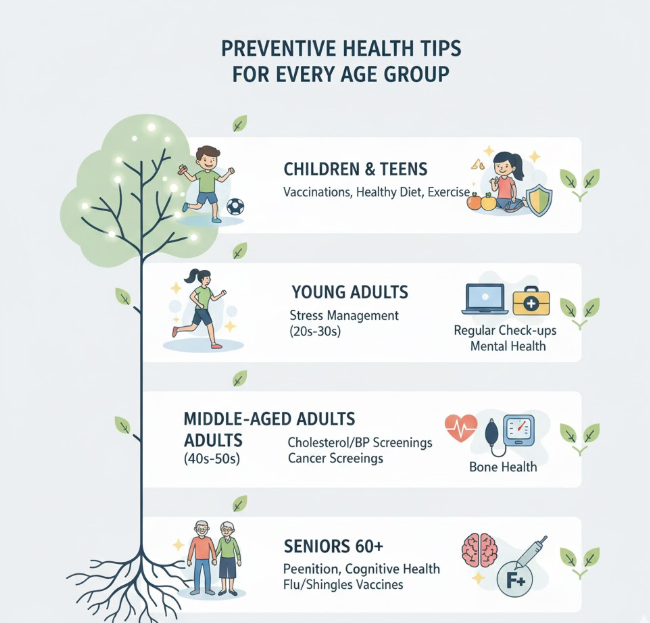
Preventive Health Advice That Works at All Ages
There are health habits that are beneficial to all people irrespective of their age. Make these part of your everyday life:
Hydration Matters
Drink water throughout the day. Aim for 8 glasses, with additional glasses when exercising or in hot weather. Water is essential for everything your body does, from digestion to temperature regulation.
Carry a reusable water bottle as a reminder. Add lemon or cucumber if plain water is boring.
Sun Protection Is Not Optional
With adequate sun protection, skin cancer is highly preventable:
- Use broad-spectrum sunscreen with SPF 30 or higher daily
- Wear protective clothing and broad-brimmed hats
- Seek shade during peak hours (10 AM to 4 PM) when the sun is strongest
- Never use tanning beds
Limit Harmful Substances
Tobacco: If you smoke, the best thing you can do for your health is to quit smoking. It’s never too late to gain the benefits of quitting.
Alcohol: Limit to one drink per day for women (two drinks per day for men). Excessive drinking damages your liver, heart, and brain.
Processed Foods: Decrease intake of foods with high amounts of added sugar, unhealthy fats, and sodium. Eat whole foods wherever possible.
Regular Dental Care
Oral health is directly related to general wellbeing. Poor dental health is associated with heart disease, diabetes, and pneumonia.
Brush twice a day for 2 minutes each time. Floss daily to remove plaque. Visit your dentist every six months for professional cleaning and checkups.
Vaccinations Remain Significant
Vaccinations are not only for children. Adults need vaccines too:
- Annual flu shot
- Tdap booster every 10 years
- Shingles vaccine after age 50
- Pneumonia vaccinations as recommended
- COVID-19 vaccines and boosters
For more information on adult vaccinations, visit the CDC’s immunization schedule.
Developing Your Own Prevention Plan
The health requirements of everyone are unique. Consult your doctor to develop your personalized plan.
Know Your Numbers
Monitor these key health indicators:
- Blood pressure: Should be under 120/80
- Cholesterol: Total less than 200 mg/dL
- Blood sugar: Fasting less than 100 mg/dL
- Body Mass Index (BMI): 18.5-24.9
- Waist circumference: Men less than 40 inches, women less than 35 inches
Set Realistic Goals
Do not attempt to change everything at the same time. First pick one or two habits to work on. When those have become routine, add more.
Be specific and measurable with your goals. Rather than “eat healthier,” aim for “eat three servings of vegetables a day.”
Keep a journal or use an app to track your progress. Seeing improvement motivates you to continue.
Find Accountability
Share your health objectives with a friend or relative. Having someone to check in with makes you more likely to succeed.
Join a walking group, fitness class, or online health-themed community. Common purposes create natural accountability.
Technology for Preventive Health
Contemporary technology provides useful preventative health tools:
Fitness Trackers: Track steps, heart rate, and sleep patterns. Tracking enables many individuals to exercise more.
Health Apps: Record meals, monitor medications, or guide meditation. Select apps that suit your personal objectives.
Telemedicine: Consult healthcare providers from home for routine questions or follow-ups. This eliminates obstacles such as transportation or time off work.
Online Resources: Access reliable health information to make well-informed decisions. Use trusted sources such as the CDC, Mayo Clinic, or your healthcare provider’s website.
Overcoming Barriers to Preventive Care
Many individuals skip preventive care despite being aware of its importance. Common obstacles include:
Cost Concerns
Insurance covers many preventative services at no charge. Verify your benefits and don’t assume you cannot afford care.
Community health centers offer sliding-scale fees based on income. Don’t neglect care because you’re concerned about finances.
Time Constraints
Schedule health appointments as you would any other important meeting. Enter them into your calendar several months ahead.
Numerous clinics operate in the evening or on weekends. Certain screenings can be done during lunch hours.
Fear or Anxiety
It’s natural to feel anxious about medical visits or test results. Remember that the sooner a disease is detected, the better the treatment outcomes.
Bring a friend or family member for support. Share your anxiety with your healthcare professional—they can make the experience less distressing.
Lack of Symptoms
Don’t wait until something is wrong. Most serious conditions can take years to manifest symptoms.
Prevention catches illnesses at the earliest stage when they are easiest to treat.
Frequently Asked Questions
How frequently should you visit the doctor as a healthy adult?
Adults are expected to undergo a checkup every 1-3 years during their twenties and thirties, and annually starting in their forties. Based on your health condition and risk factors, your doctor might advise more frequent visits.
Are home health tests accurate?
Certain home tests are very precise when used correctly, such as blood pressure monitors and blood glucose meters. Nevertheless, they do not replace professional medical attention. Always discuss concerning results with your physician.
What if I cannot afford routine preventive care?
The Affordable Care Act covers many preventive services through insurance. Low-cost or free preventive services are also available at community health centers, free clinics, and local health departments. Find out what is available in your area.
Which screenings do I require?
Your doctor can prescribe screenings depending on your age, gender, family history, and personal risk factors. Bring a list of your family’s health history to your appointment.
Can lifestyle prevent illness?
Absolutely. Healthy lifestyle habits can prevent or postpone up to 80% of heart disease and stroke, 80% of type 2 diabetes, and 40% of cancers. Small changes can accumulate into great benefits.
Is it too late to start preventive health habits at an older age?
It is never too late to enjoy the benefits of healthy changes. Even in your sixties or seventies, improving diet, exercise, and other lifestyle factors can dramatically raise quality of life and reduce the risk of diseases.
Your Health Journey Begins Today
Preventive health is not a complex or costly undertaking—it’s about making wise daily decisions. The guidance in this article provides you with a roadmap for every decade of life.
Start where you are right now. Choose one habit to improve this week. Book that checkup you’ve been delaying. Take a 15-minute walk after dinner. Drink an additional glass of water tomorrow.
Even little steps, when summed up, become incredible outcomes. The preventive steps you take today will be appreciated by your future self. You are much more in control of your health than you may believe. Take charge, stay informed, and place your wellbeing first at any age.
Your health is the best investment in life. Put effort into it and it will yield lifelong returns.
For more health and wellness tips, visit Cakvia.