
The Reason Why Your Daily Food Choices Are More Important Than You Think
Every time you eat, you make a decision. Certain decisions power your body like fine gas in a sport car. There are others that make you feel slow and fatigued. The good news? You do not have to be a nutritionist or even be on complex diets to eat well. Easy, everyday diet choices can change the way you feel, look and work.
Consider your body to be like a smartphone. It begins to glitch without properly charging it and updating the software. Your body works the same way. Feed it the right nutrients per day and you will be more energetic, focused, faster in thinking and with more immunity. Omission of the basics would make the difference felt soon.
This guide dissects the practical, easy-to-follow nutritional tips which can work in your life. No elaborate dinner plans or prohibitive supplements needed. It is simple honest advice that works.
Start Your Day Right With Breakfast Staples
The food that you eat in the morning determines the whole day. It is equivalent to not having a full tank of gas in your car when you get on the road. You can go on, but you will not go far before you get into trouble.
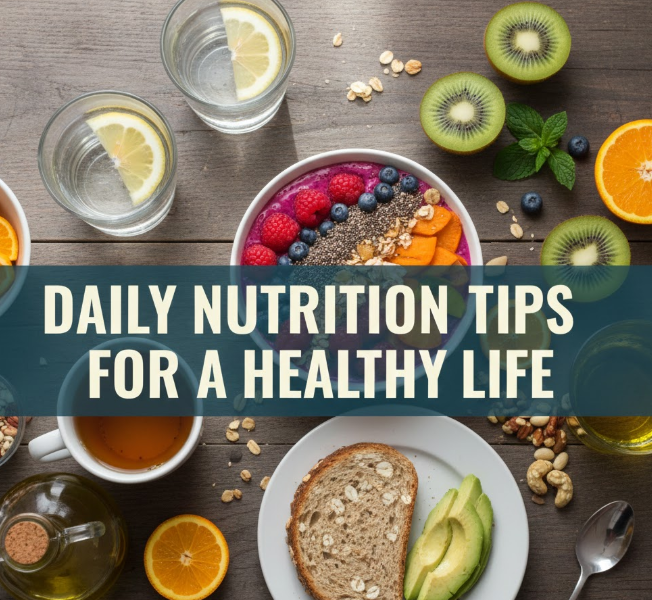
A good breakfast meal must contain three elements: fiber, healthy fats, and protein. Protein may be eggs, Greek yogurt or peanut butter. Whole grain toast, oatmeal or fresh fruit would provide fiber. Avocados, nuts or seeds contain healthy fats.
This is what will occur when you have a balanced breakfast: your blood sugar level remains healthy, your mind works better and you become less likely to overeat at lunch. Research indicates that individuals who take breakfast are at a healthier weight and their concentration levels are higher in the morning.
Some of the fast breakfast meal suggestions are:
- Scrambled eggs with whole wheat toast and sliced tomatoes
- Overnight oats with berries and almonds
- A smoothie made of spinach, banana, protein powder and almond milk
The Rainbow Rule: Eating Colorful Vegetables and Fruits
Food color-coding by nature is not in vain. Various colors denote various nutrients, vitamins and antioxidants. When you feed the body with colors you are providing the body with a total package in terms of nutrition.
Lycopene which helps the heart is found in red foods such as tomatoes and strawberries. Vitamin A is found in orange and yellow foods such as carrots and mangoes that are good to help boost your vision. Spinach and broccoli are examples of green vegetables that provide iron and calcium. Foods that are blue and purple such as blueberries and eggplant contain potent antioxidants that safeguard your cells. White foods such as cauliflower and garlic also increase your immune system.
Target no less than five fruits and vegetables of different colors every day. This isn’t as hard as it sounds. An omelet made of spinach in the morning, carrot sticks in the middle of the day, a rainbow salad in the afternoon and roasted bell peppers in the evening should not find much trouble making your rainbow complete.
Fresh is good, but frozen vegetables are also good. They are harvested when they are at the optimum ripeness and immediately frozen; this preserves nutrients. On top of this, they are cost effective and will not lead to food waste as they will not get spoiled easily.
Hydrating Your Body: The Most Significant Nutrient
Water does not just bring your thirst down. It transports nutrients to your cells, cleanses out any toxins, regulates your body temperature, cushions your joints and assists your organs to work well. Even trivial dehydration may result in headache, fatigue and lack of concentration.
How much water do you need? One of the basic rules is to consume half your body weight in ounces a day. Assuming you are 150 pounds, you need 75 ounces of water. That’s about nine cups. More of it is going to be required in case of heavy exercise or hot climates.
Not a fan of plain water? Follow these tips:
- Add lemon or cucumber slices to add fresh taste
- Drink herbal tea (this will also be counted in your individual water consumption)
- Consume water-rich foods, such as watermelon and cucumbers
- Use hourly reminders on your phone to take a few sips
Coffee and tea will add up to your daily fluid intake, but be careful of the sugar added. Sodas and energy drinks do not hydrate your body since the sugar and caffeine can in fact dehydrate your body.
Protein Power: Building Blocks of Your Body
Protein does not just build muscles. It mends tissues, synthesizes enzymes and hormones, aids in the functioning of the immune system, and helps you stay fuller. Lack of sufficient protein causes your body to start using muscle tissue as a source of energy.
Daily grams of protein required depend on your age, size, and level of activity. One of these guidelines is 0.8 grams of protein per kg of body weight. That is approximately 55 grams per day for a 150-pound individual. Athletes and highly active individuals require more.
Protein-Rich Food Options
| Food Source | Protein Content (per serving) | Additional Benefits |
|---|---|---|
| Chicken breast (3 oz) | 26g | Low fat, versatile |
| Greek yogurt (1 cup) | 20g | Probiotics for gut health |
| Lentils (1 cup cooked) | 18g | High fiber, plant-based |
| Salmon (3 oz) | 19g | Omega-3 fatty acids |
| Eggs (2 large) | 12g | Contains all essential amino acids |
| Almonds (1/4 cup) | 8g | Healthy fats, vitamin E |
Eat your protein in bits across the day instead of concentrating it at dinner. Protein is better absorbed in small amounts with frequent dosages by your body. Eat protein at each meal and snack to keep the energy levels steady.
Smart Carbohydrates: The Power to Fuel Your Day
Fad diets made carbohydrates a bad guy and you need this energy source as it is your body’s favorite energy. It is all a matter of selecting the appropriate types. Whole foods give the body long-lasting energy due to complex carbohydrates whereas processed foods lead to energy crashes due to simple carbohydrates.
Whole grains such as brown rice, quinoa, oatmeal, and whole wheat bread have slow digestion properties, which maintain your blood sugar constant. They are also rich in fiber, B vitamins and minerals. White bread and white rice have been refined, removing all these nutrients.
When doing shopping, seek out the products that have the first ingredient of whole grain. A brown color does not necessarily indicate whole grain—producers can add molasses or food colorant to give a product the appearance of healthier products.
Great sources of carbohydrates are sweet potatoes, beans, and legumes that are rich in nutrients. They are also cheap, are multi-purpose and will be a constant companion throughout the day. For more healthy eating tips, visit Cakvia.
Healthy Fats: Friend, Not Foe
Your brain is about 60% fat. Fat encloses each of your cells. It aids in the absorption of vitamins A, D, E and K. It provides backup energy. It makes your skin gleaming and your hair sleek. Elimination of fats is a horrible plan.
It is not the issue of fat per se but rather the quality of fat. Bad cholesterol is raised by trans fats (in a variety of fried and processed foods) and excessive saturated fats. Plant and fish fats which are unsaturated in nature, in fact, help in improving heart conditions.
Sources of healthy fats include:
- Avocados
- Nuts and seeds
- Olive oil
- Fatty fish such as salmon and mackerel
- Nut butters
Include these healthy fats on a daily basis. Even a little bit goes a long way. One tablespoon of olive oil on the salad, a handful of walnuts as a snack, or half an avocado on toast will have significant benefits.
Use olive or avocado oil in place of butter. Eat nuts, rather than chips. Add flaxseeds to your smoothie or oatmeal. Such minor substitutes cumulate to significant health benefits in the long run.
Portion Control Without Feeling Deprived
Even with all the right foods, you can still gain weight in case you eat too much of the food. The portions at restaurants have swollen throughout decades. A meal that was shared by two people is now being served to an individual.
Portion guide:
- Use your palm as a guide for one portion of protein (approximately 3-4 ounces)
- Your fist as a guide for one portion of vegetables or carbohydrates (approximately 1 cup)
- Your thumb as a guide for one portion of fats (approximately 1 tablespoon)
- Your cupped hand as a guide for one portion of nuts or dried fruit (approximately 1/4 cup)
Eat slowly and mindfully. It is approximately 20 minutes before your brain gets the message that your stomach is full. Eaters with a fast metabolism consume too much food before their body can recognize that it is being filled.
Have vegetables or soup as a starter to fill your stomach with low-calorie and nutrient-dense food partially. Portions can be made to look bigger with smaller plates. Put away and store leftovers as soon as possible rather than leaving serving dishes on the table.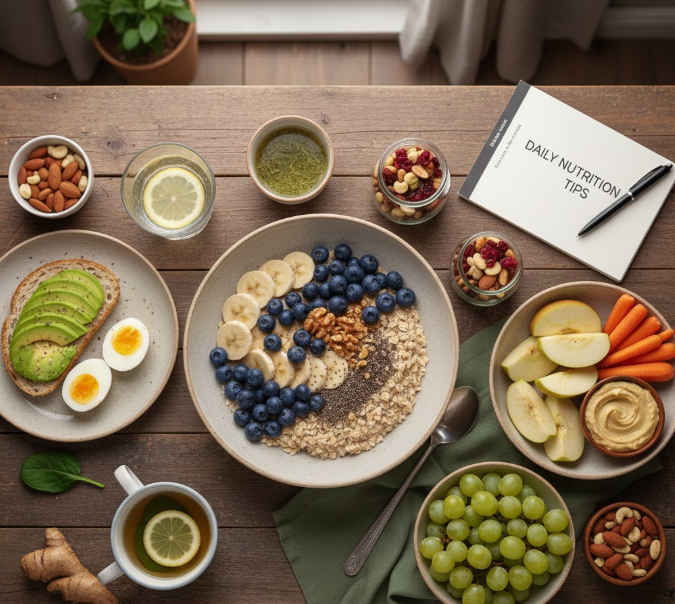
Meal Planning and Prep: Your Strategy for Success
Lack of sufficient time can result in inappropriate food choices. When you are hungry and are too tired to cook, you may prefer fast food or get pizza delivered to your door. This problem is solved through planning.
Spend one or two hours per week preparing meals. Clean and cut vegetables, boil grains in large amounts, cook proteins and pack snacks into containers. The availability of ready-to-eat healthy foods would make healthy choices as easy as junk food.
Weekly Meal Prep Timeline
Sunday afternoon: Plan your diet, make a grocery list, and purchase food. Select recipes with similar ingredients to reduce wastage and expenditure.
Sunday evening: Cook in bulk (grill some chicken breasts, bake salmon, hard boil eggs), prepare grains (cook brown rice, quinoa), wash and chop vegetables, and pack snacks.
During the week: Mix and prep pre-made food materials to make fast meals. Ready-made chicken is used in salads, wraps, stir-fries or pasta. Cooked quinoa is transformed to breakfast porridge, lunch bowls, or dinner sides.
Stock your pantry with essentials: canned beans, whole grain pasta, brown rice, oats, canned tomatoes, olive oil, vinegar, spices. A good pantry means that you are not more than 20 minutes away from a good meal.
Snacking Smart: Fueling Between Meals
Snacks create a space between the meals so that one does not overeat due to extreme hunger. The right snacks are energy giving and full of nutrients. The misguided ones are spiking your sugar and you are hungry an hour after that.
Eat protein or fat with carbohydrates to have a balanced snack which will keep you satisfied. Apple with almond butter slices have a combination of carbohydrates in fruits and protein and fat. A combination of protein and carbohydrates is Greek yogurt and berries. Hummus and vegetables are a combination of protein, fat, and fiber.
Pre-portion snacks so that you do not have to eat the whole bag of nuts or box of crackers. Prepare small portions in packages or bags to grab and go.
Be careful of calories in drinks and health snacks. Smoothies may be calorie-rich. Energy bars contain as much sugar as candy bars do. Read labels carefully.
Reading Nutrition Labels: It’s Easier Than You Think
Food labels are very informative, however, they can be deceptive. Here’s what matters most:
Start with serving size. The figures on the label are all associated with one serving and not the whole package. When you are eating a package of three servings, you multiply all of them by three.
Check calories per serving. This can assist you to plan daily consumption.
Consider added sugars, rather than total sugars. Fruits and milk contain fine natural sugars. Added sugars (under specific categories on labels) are to be reduced to less than 25 grams per day.
Examine the ingredient list. The ingredients are listed in descending order of weight. When sugar, corn syrup, or refined flour is found in the first three ingredients then the product is highly processed.
There is nothing to fear about all fat or sodium, however, amounts should be considered. Check whether the product offers a good percentage of your daily value.
Limiting Processed Foods and Added Sugars
Foods that are processed are easy to prepare yet they may be high in sodium, added sugar, unhealthy fats, and artificial products. They are also made to be hyper-palatable—made to make you want more.
Sugar is added to unexpected sources: bread, pasta sauce, salad dressing, yogurt, and condiments. The average human being eats approximately 17 teaspoons of added sugar every single day which is more than three times the suggested quantity.
The high intake of sugar is associated with obesity, type 2 diabetes, cardiovascular diseases, tooth decay, and inflammation. A reduction by a large margin enhances health indicators.
Cook at home more often. By being in charge of the ingredients, one is in charge of what they put in their bodies. Home-cooked food would generally have lower sodium, sugar and unhealthy fats compared to restaurant or packaged foods.
Whenever purchasing packaged foods, only purchase those that have five or less ingredients, and that you can pronounce and identify as real food.
Special Attention to the Various Stages of Life
The nutritional requirements are different throughout life. Growing bones require enough calcium and vitamin D in children. Teenagers need additional calories and proteins during growth spurts. Folate, iron, and protein are required in greater amounts by pregnant women.
Adults are also supposed to concentrate on healthy weight and disease prevention. It implies the abundance of fruits, vegetables, whole grains, lean proteins, and healthy fats and reducing the intake of processed foods, added sugar, and excessive sodium.
Older people may need fewer calories yet their body may require nutrient-dense food due to the fact that they absorb nutrients less effectively. Their priority should be calcium and vitamin D to keep the bones healthy, vitamin B12 to keep the nerves working, and enough protein to prevent muscle loss.
Very active individuals such as athletes require more calories and carbohydrates as their source of energy and protein to restore their muscles. The timing is also an issue—consumption of carbohydrates and protein within 30 minutes after exercise contributes to recovery. According to the Mayo Clinic, proper nutrition timing can significantly impact athletic performance and recovery.
Making It a Habit: Building Long-Term Success
Perfection isn’t the goal. Consistency is more important than occasional indulgence. Strict adherence to nutrition rules 80 percent of the time would yield great results. The remaining 20 percent will be flexible, party time, and special meals.
Make one change at a time. An attempt to change your whole diet overnight is most likely to make you feel overwhelmed and fail. Begin by including one vegetable in dinner. When it becomes automatic, add another positive change.
Monitor your progress but do not be obsessive. Monitor your feelings, energy, quality of sleep and mood instead of being obsessed with weight. Such non-scale victories are the ones that come ahead of the scale movement.
Locate healthy alternatives of your favorites. Crave pizza? Prepare it yourself using whole wheat crust, lots of vegetables, and moderate cheese. Love burgers? Use lean ground turkey, add spinach or mushrooms and serve on whole grain buns.
Celebrate small wins. Drank your water goal today? That’s worth acknowledging. Took fruit instead of cookies? Recognize that choice. Positive reinforcement establishes long term habits in a better way than self-criticism.
Frequently Asked Questions
Q: What is the number of meals that I should take per day?
A: There’s no magic number. There are those who are okay with three meals, those who like five or six smaller meals. It is the overall nutrition each day and seeking a routine that suits your lifestyle and makes you satisfied.
Q: Do I need supplements even when I am eating healthy?
A: Food provides the majority of people with sufficient nutrients. But vitamin D, vitamin B12 (especially for vegetarians) and omega-3s (especially when not eating fish) may need to be supplemented. Supplements should be started in consultation with a healthcare specialist.
Q: Will eating carbs at night make me gain weight?
A: The time of day that one eats is not as important as the number of calories and the quality of food taken in a day. Consumption of carbs at night does not necessarily lead to weight gain. When you sleep, your body does not cease food processing.
Q: How do I eat out and stay healthy?
A: Order grilled rather than fried, order sauces separately, eat salad or soup first, take water instead of soda and think about taking half your meal home. It is possible to find healthier options in most restaurants.
Q: What is the most effective diet to lose weight?
A: The ideal diet is the diet that is sustainable. Consider whole foods, proper proportions, and physical exercise instead of pursuing restrictive or fad diets that maintain initial success but become ineffective over time.
The Road to Your Lifelong Wellness
Being a healthy eater does not mean being perfect, restricted, or having complex rules to follow. It is all about making smart decisions the majority of the time, eating what you like, and taking care of your body.
Minor differences bring major outcomes. Including a serving of vegetables a day, having another glass of water, or replacing white rice with brown rice may not be considered important. However, these decisions add up in terms of weeks, months and years to radically improved health.
Your body is very forgiving and receptive. Start to treat it better today, and you will see the results within a short period of time. The results of improved energy and sleep, clearer thinking, and being in a better mood are usually seen in days or weeks.
It is important to keep in mind that no one always eats perfectly. Life involves birthday cake, holiday meals and impromptu visits to the ice cream shop. Such foods are part of a full rich life. Bring them into an everyday healthy diet, and you will prosper.
Begin with one of the tips from this article. Master it. Then add another. It takes no time before you start making healthy eating a new habit—not a burden, but a way of life. Your future self will be grateful for every positive decision you make today.